
Last updated November 21, 2026
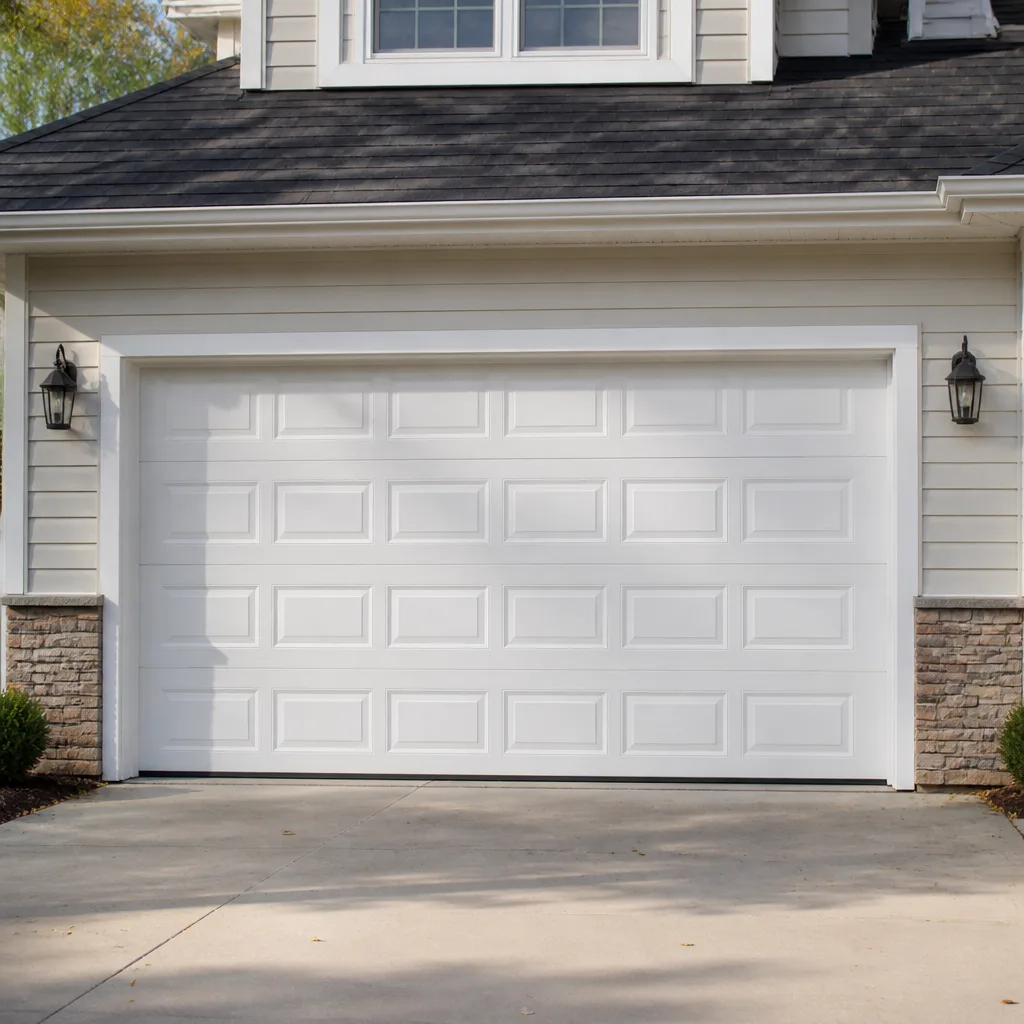 Raised-panel steel
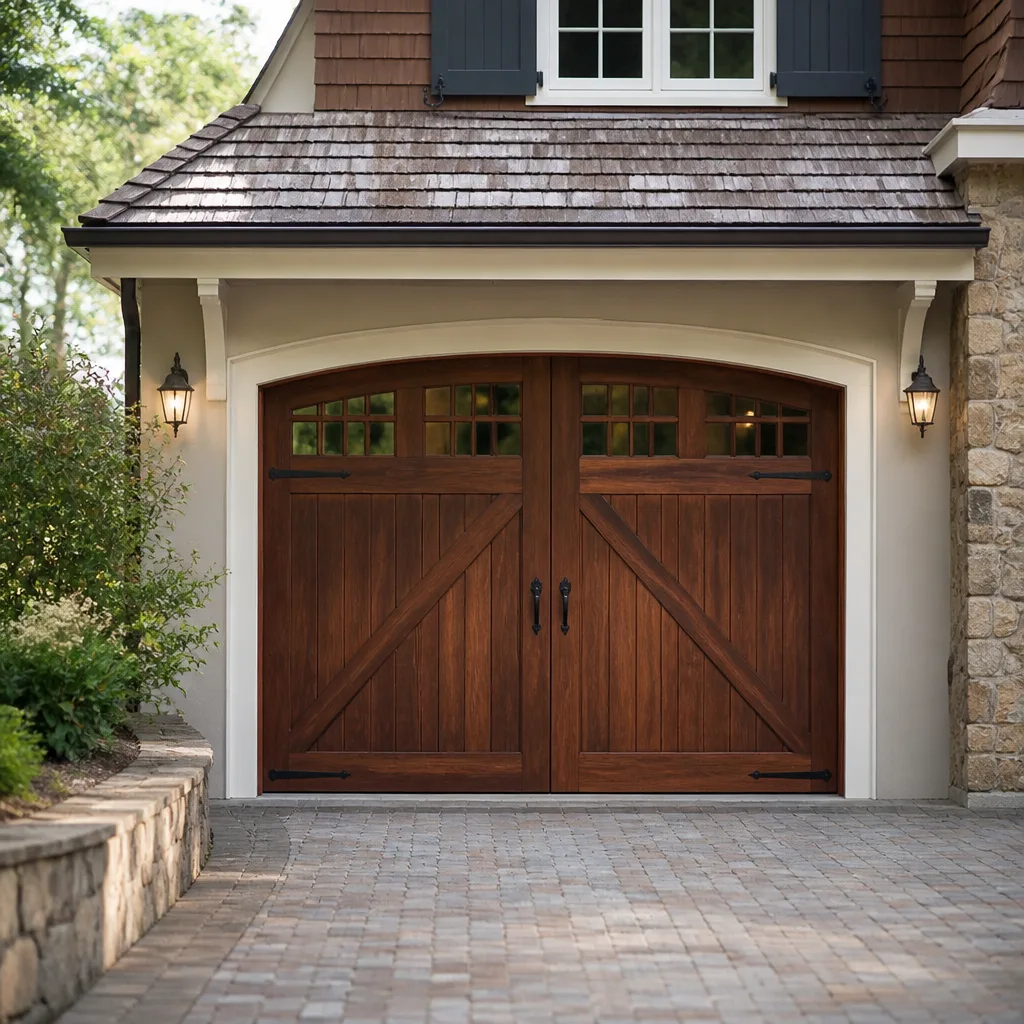 Carriage house
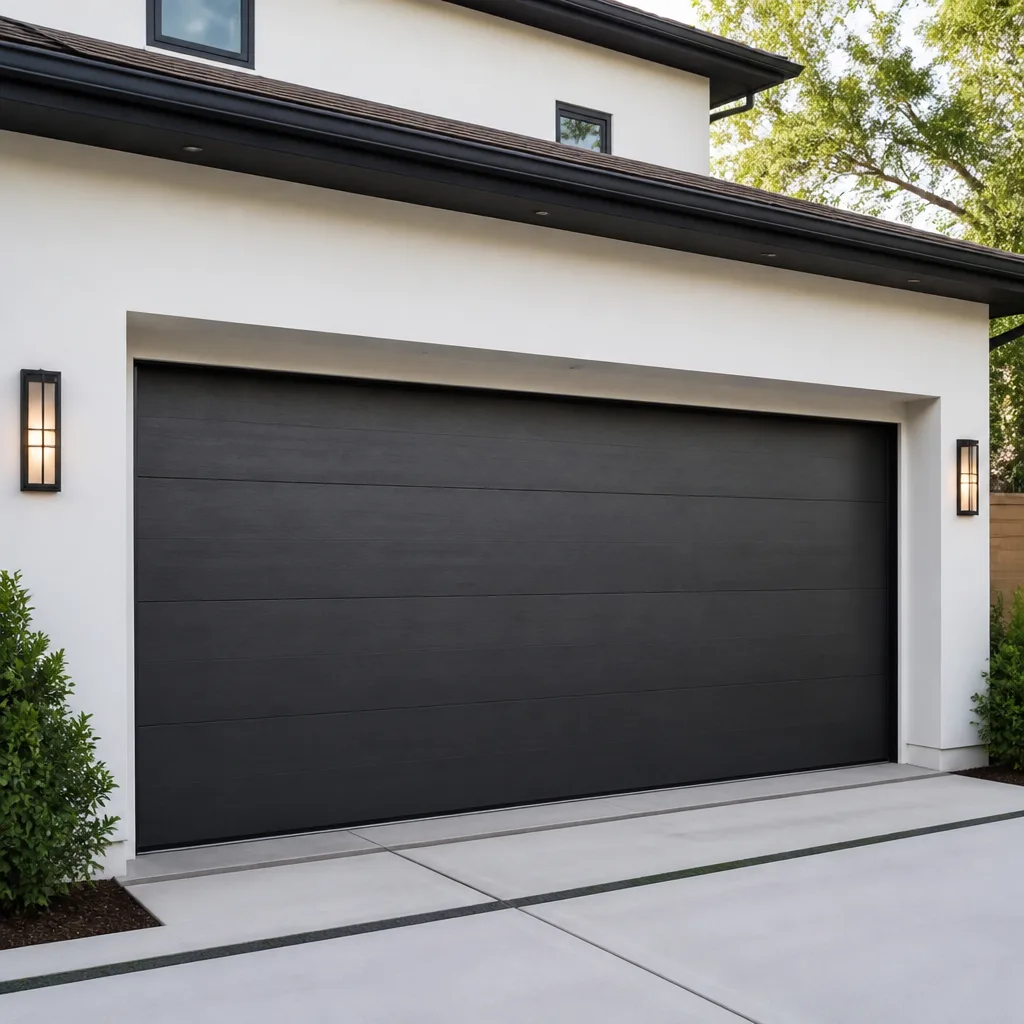 Modern flush
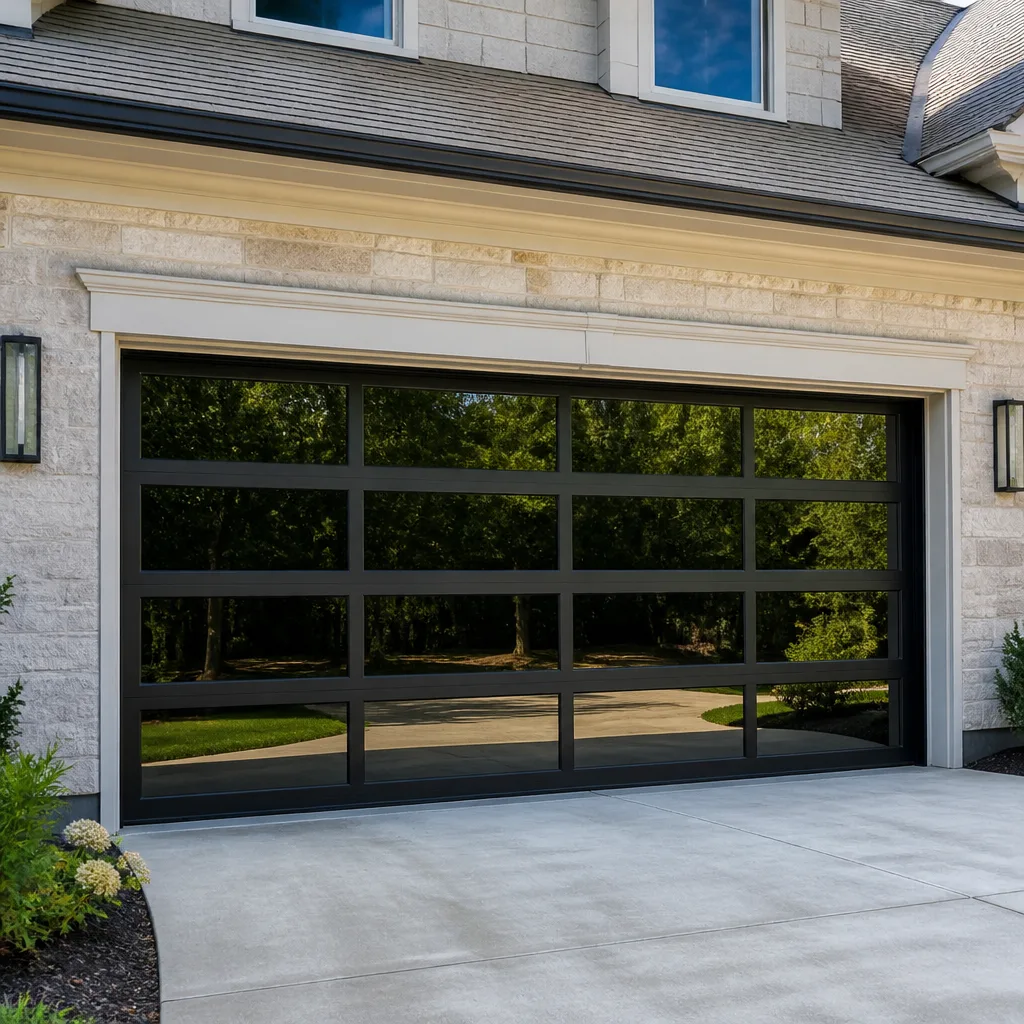 Full-view glass
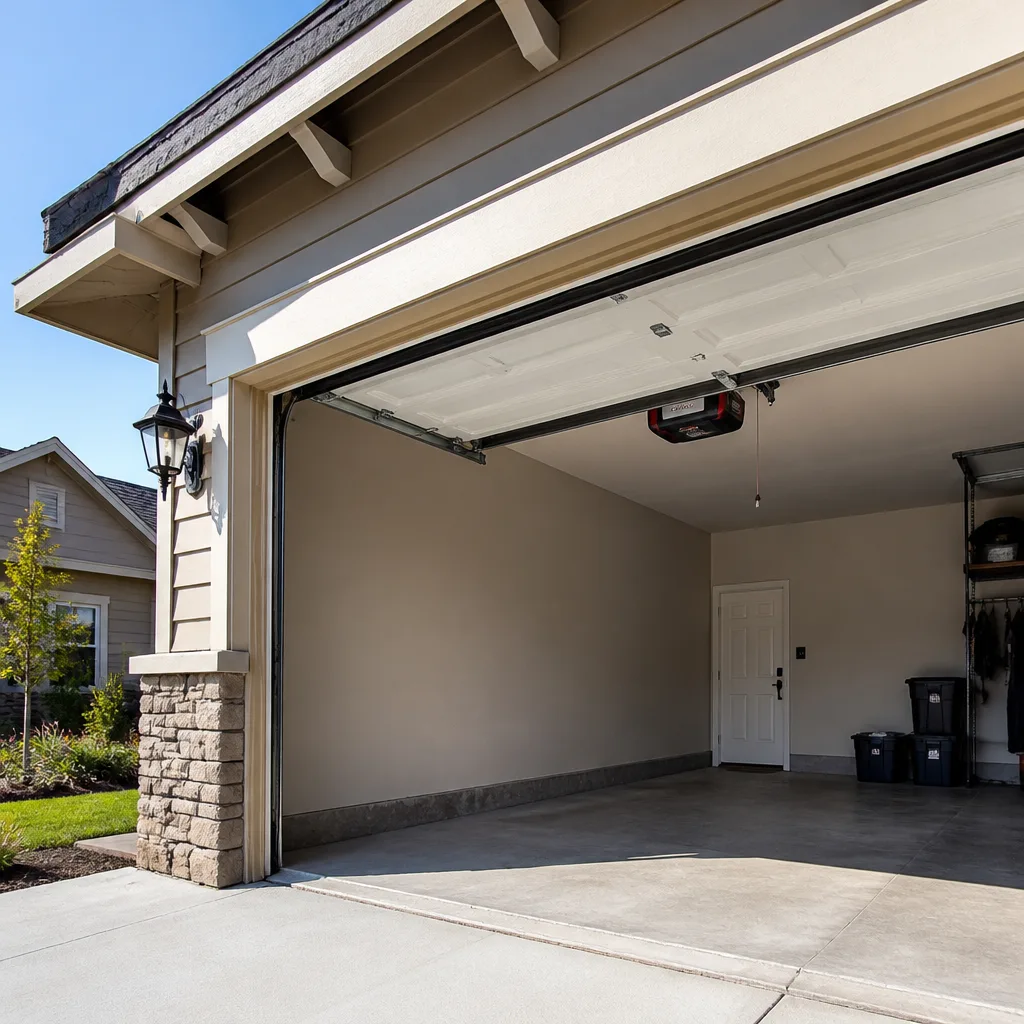 LiftMaster openers
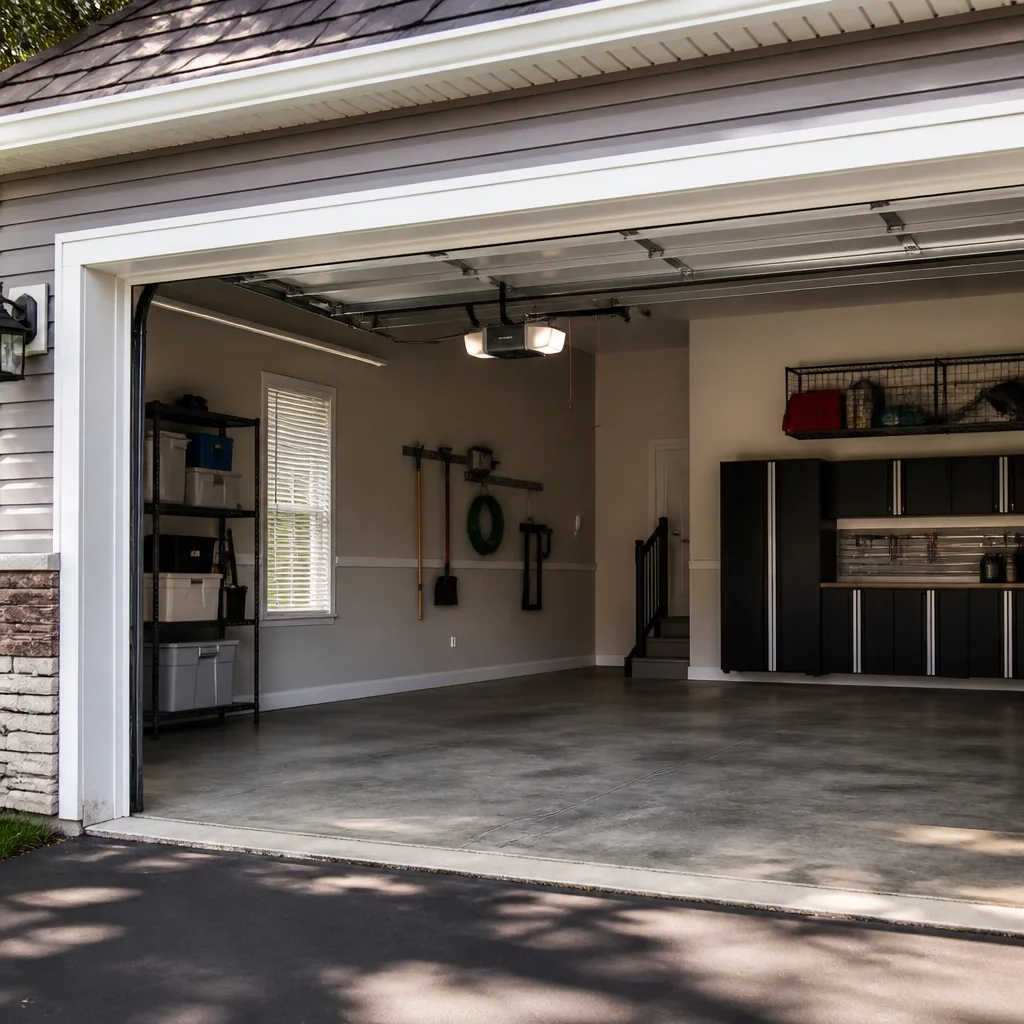 Chamberlain openers
Full 25-point door and opener safety check with every visit - springs, cables, rollers, tracks, and your LiftMaster or Chamberlain opener included
You get a price before we start. It does not change when the pro arrives.
Get your free estimateThe Complete Guide to Garage Doors in Northeast Minneapolis
A large share of homes in Northeast Minneapolis went up before 1960, and that one fact changes almost every garage door decision you’ll make. The door itself is often the newest thing on the property. The structure holding it, the alley approach feeding it, and the wiring running to the opener are usually the original. It’s common to call about a door that won’t close and learn the real limit is a sagging header or a slab that has heaved. This guide maps repair, opener work, spring replacement, and new installation to the actual conditions in Northeast Minneapolis, so you can tell which path is worth the money and which is a temporary patch.
Quick Answer
Garage door problems in Northeast Minneapolis usually come down to three local conditions: pre-1960 detached garages with limited clearance, freeze-thaw movement from October through April, and alley-facing openings that are narrower than a modern standard. Repair is the right call when the door panels, tracks, and framing are sound. Replacement makes more sense when the structure has settled, the panels are rotted, or repeated hardware failures point to a door that no longer fits its opening. Either way, the price is quoted in writing and agreed before any work starts.
Styles & brands we work with
- Raised-panel steel
- Carriage house
- Modern flush
- Full-view glass
- LiftMaster openers
- Chamberlain openers
Table of Contents
- Why Northeast Minneapolis Housing Stock Changes Every Garage Door Decision
- How the Freeze-Thaw Cycle Drives Hardware Failure
- Alley-Access Garages and What They Limit
- Can Your Detached Garage Support a New Door?
- Repair, Tune-Up, or Replace: The Full Service Lifecycle
- Brand Availability and Service Coverage in the Minneapolis Metro
- Opener Decisions for Older Northeast Minneapolis Garages
- Common Mistakes to Avoid
Why Northeast Minneapolis Housing Stock Changes Every Garage Door Decision
The garages in Northeast Minneapolis were built for cars that were smaller, lighter, and had different clearances than anything on the road now. That’s the first thing to understand before you price a door. A one-car detached garage from the middle of the last century was often framed with a rough opening sized for a wooden door that swung or slid, not for a sectional door that travels on tracks. When a sectional door was added later, it was sometimes squeezed into whatever space the framing allowed.
What this means in practice:
- Headroom is often tight. A standard sectional door needs enough room above the opening for the door to sit when it’s open. Low-clearance setups exist, but they change which springs and tracks work.
- Side room matters as much as headroom. Torsion springs mount on a shaft above the door. Extension springs run along the horizontal tracks. On a narrow garage, there may not be room for the standard layout.
- The slab may not be level. Older concrete moves. A door that closes flush on one side and gaps on the other is usually telling you about the floor, not the door.
- Framing was sized for a lighter door. A modern insulated door weighs more than the original. The header and jambs need to carry that load.
None of this means an older Northeast Minneapolis garage is a problem. It means the measurements matter more than the brochure. Before anyone quotes a replacement, the opening should be measured for width, height, headroom, and side room, and the framing checked. If you’re weighing repair against replacement right now, our Garage Door Repair Northeast Minneapolis page covers the repair side in detail.
How the Freeze-Thaw Cycle Drives Hardware Failure
Between October and April, the ground in Northeast Minneapolis freezes and thaws repeatedly. Every cycle moves the garage slab and the structure sitting on it, by small amounts. Small amounts are enough. A door is a heavy object balanced on a spring system and rolling on tracks. When the slab shifts a fraction and the framing follows, the door goes out of alignment. That misalignment is what wears out hardware ahead of schedule.
The failures we see most in this climate:
- Spring fatigue. Steel springs lose tension with every cycle of use, and cold makes the metal less forgiving. A spring that’s near the end of its life in July tends to fail in January.
- Track and roller bind. A track that’s slightly out of plumb in fall becomes a binding track once the slab moves. Binding puts load on the opener and the springs.
- Weather seal failure. The bottom seal takes the brunt. Once it cracks, snowmelt and cold air get under the door, and the panel edges start to corrode.
- Opener strain. An opener fighting a binding door runs hotter and wears faster. A dead opener is often the messenger, not the cause.
- Hinge and fastener loosening. Repeated expansion and contraction works fasteners loose. Loose hinges throw the panels out of line.
This is why a spring replacement done right in Northeast Minneapolis includes a look at the tracks, rollers, hinges, and balance of the door, not just the spring itself. If you’re already hearing a bang from the garage or the door won’t lift, that’s spring territory, and it’s not a job to take on yourself. High-tension springs and the cables under them store serious energy; a slip can cause severe injury. This is a job for a trained technician with the right winding bars and the knowledge to use them.
Alley-Access Garages and What They Limit
Much of Northeast Minneapolis is laid out with garages facing the alley rather than the street. That layout is part of what makes the neighborhood work, and it’s also part of what makes garage doors here trickier than a national average suggests. An alley approach is narrower, often uneven, and sometimes sloped toward a drain. You’re backing in or pulling out with less room than a driveway gives you.
What that changes:
- Opening width is usually fixed. Widening an alley-facing opening means altering the structure and often the approach. Most of the time, the door has to fit the opening you already have.
- Impact damage is more common. A clipped panel or a bent bottom section from a tight turn is a normal repair here. It’s a panel and track repair, not a whole-door replacement.
- Clearance for a new door is tighter. Low-headroom and low-side-room track configurations come into play more often on alley garages.
- Security matters more. An alley garage is less visible from the house. A door that won’t close fully is a real exposure, which is why a door stuck open is one of the calls that can’t wait for a scheduled appointment.
In our experience, the alley configuration is the single most common reason a Northeast Minneapolis homeowner is told a standard door “won’t fit.” It usually will, with the right track and spring configuration. It just has to be measured properly first.
Can Your Detached Garage Support a New Door?
Before a new door goes in, the structure underneath it has to be able to carry it. A detached garage in Northeast Minneapolis that’s stood for sixty years has taken a lot of freeze-thaw, and the framing may have moved with it. This is the step homeowners skip, and it’s the one that decides whether a replacement lasts.
Here’s how a proper assessment works:
- Check the header. The beam over the opening carries the load above it. Sagging, cracking, or a header that’s been notched or cut is a red flag. It needs to be sound before a heavier door goes on.
- Check the jambs and side framing. Tracks mount to the jambs. Rotted or loose wood means the track won’t stay true, and a track that won’t stay true wears out springs and rollers.
- Check the slab and floor. A floor that’s heaved or cracked changes how the door seals and how the tracks sit. Some of this can be worked around. Some of it means the door will never seal properly without floor work.
- Check headroom and side room with a tape, not an estimate. Measure, don’t guess. Low-clearance hardware solves many tight setups, but only if the measurements say so.
- Check the power and ceiling for the opener. An older detached garage may have limited or no wiring to the opener location, and the ceiling may not be built to hang a heavier unit.
If the framing needs reinforcement, that’s usually a modest addition to a replacement project compared with the cost of putting a door on a structure that can’t hold it. Our garage door installation process starts with those measurements and a written price, so you know what you’re getting before anything is ordered.
Repair, Tune-Up, or Replace: The Full Service Lifecycle
Most garage door decisions come down to timing. Repair now, tune up and wait, or replace. The right answer depends on what’s actually failing. Here’s how we think about it.
Repair is the right call when the structure, panels, and framing are sound and something specific has failed: a spring, a cable, a roller, a hinge, a bent track, or a panel dinged by an alley turn. A repair fixes the problem without changing the door.
A tune-up makes sense when the door still works but is louder, slower, or rougher than it used to be. Lubrication, balance adjustment, track alignment, hinge tightening, and seal replacement are cheap compared with a replacement, and they extend the life of the hardware that’s still good.
Replacement is the cost-effective path when:
- The panels are rotted, cracked, or delaminating along the bottom edge where snowmelt sits.
- The door has been repaired repeatedly and the failures keep coming back, which usually points to a door that no longer fits its opening.
- The structure has settled to the point that the door can’t seal without major framing or floor work.
- You want insulation, and the existing door can’t be retrofitted effectively.
- Safety features are missing and the door is old enough that a modern door with proper safety hardware makes more sense than adding to an aging system.
The lifecycle view matters because it’s easy to spend money in the wrong order. Replacing an opener on a binding door, or replacing a door on a door that just needed a spring, both waste money. Get the diagnosis right first. If the issue is on the opener side, our garage door opener repair page walks through what a proper diagnosis covers.
Brand Availability and Service Coverage in the Minneapolis Metro
National averages don’t tell you much about what’s actually on garages in Northeast Minneapolis. The doors and openers here tend to be brands that were installed by local builders and dealers over the decades and are still supported today. That’s good news for repair. The question that matters is whether the technician knows your specific system well enough to diagnose it quickly and get the right part the first time.
We’re factory-familiar with eight of the major brands homeowners actually own: LiftMaster, Chamberlain, Genie, Clopay, Amarr, Wayne Dalton, Craftsman, and Raynor. On the opener side, that means knowing how a LiftMaster or Chamberlain logic board reports a fault, or how a Genie unit behaves when its travel limits drift. On the door side, it means knowing Clopay and Amarr panel profiles and how a Wayne Dalton or Raynor system is put together. In practical terms, that knowledge is the difference between a diagnosis on the first visit and a return trip waiting on parts.
What a Northeast Minneapolis homeowner should expect from a specialist:
- Service on the brand you already have, rather than a push to replace it with one brand.
- Parts sourced to your actual door or opener model, not a generic fit.
- A diagnosis that explains what failed and why, so you can decide on repair or replacement with real information.
If you’ve been told your brand is “too old” or “not something we handle,” that’s a generalist limitation, not a failing of the equipment. A single-trade specialist works on the full lifecycle of the door you have.
Opener Decisions for Older Northeast Minneapolis Garages
An opener is the part of the system that gets blamed for problems it didn’t cause. When a door won’t open, the opener is what you notice. The cause is often the door. A binding track or a tired spring makes the opener work harder, and an opener working harder eventually quits.
In a Northeast Minneapolis garage, the opener questions are usually these:
- Is the opener actually the problem? Disconnect the door from the opener and try lifting it by hand. If it’s heavy or binds, the door needs attention before the opener does.
- Is the opener matched to the door? A modern insulated door weighs more than an older one. An opener sized for the original door may be undersized for a replacement.
- Are the safety features working? The reversing function and the safety sensors are the features that matter most. If they’re not working, the opener needs service, not a setting change.
- Does the garage have the wiring and ceiling for a new unit? A detached alley garage may need electrical work before a new opener goes in.
- Should the opener be replaced with the door? When a door is being replaced, it’s worth checking whether the opener is still appropriate for the new door’s weight and travel.
Cold affects openers too. A unit that’s marginal in the fall may fail once the temperature drops, because the lubricant thickens and the door itself is stiffer. If your opener is failing in the cold, the diagnosis should cover the door and the unit together. A garage door specialist doesn’t split the two apart.
Common Mistakes to Avoid
- Replacing a door when the diagnosis was wrong. A door that won’t close is often a track alignment or a spring issue, not a worn-out door. Get the cause identified before you price a replacement.
- Skipping the framing check before a new door. In a pre-1960 Northeast Minneapolis garage, the framing is the variable that decides what’s possible. Measure it before ordering anything.
- Assuming a standard door will fit an alley-facing opening. Headroom and side room in alley garages are often tighter than they look. Low-clearance configuration has to be confirmed with measurements.
- Ignoring a small seal failure. A cracked bottom seal lets snowmelt and cold air under the door, and the panel edge is what corrodes first. A small seal repair is cheaper than a panel replacement.
- Putting a new opener on a binding door. The opener will fail too. Fix the door’s balance and travel first, then decide about the opener.
- Letting a noisy door run until it fails. Noise, slow movement, and a door that closes unevenly are early signs. A tune-up at that point is cheaper than a repair after a failure.
- Trying spring or cable work yourself. These parts store serious energy. A trained technician with proper winding bars is the only safe route, and the difference in price is small compared with the risk.
See the difference
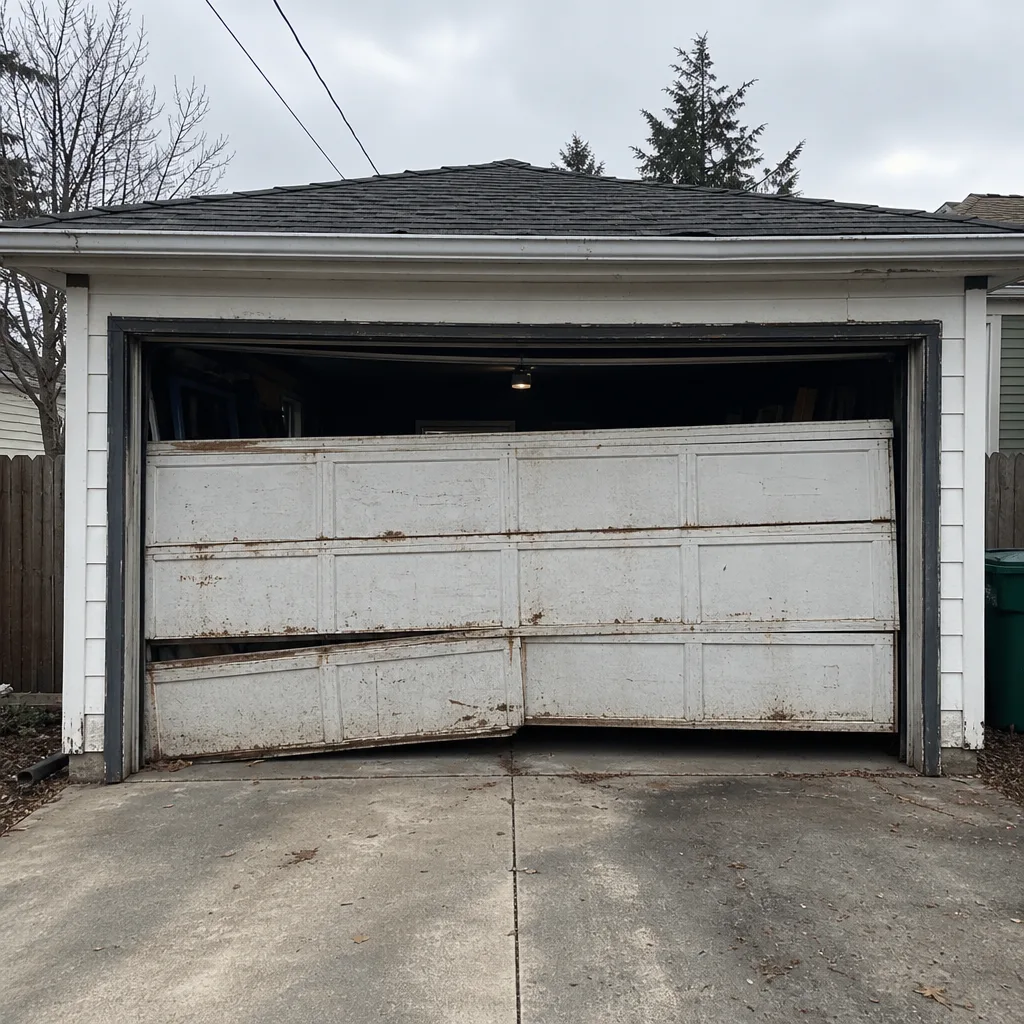 Before
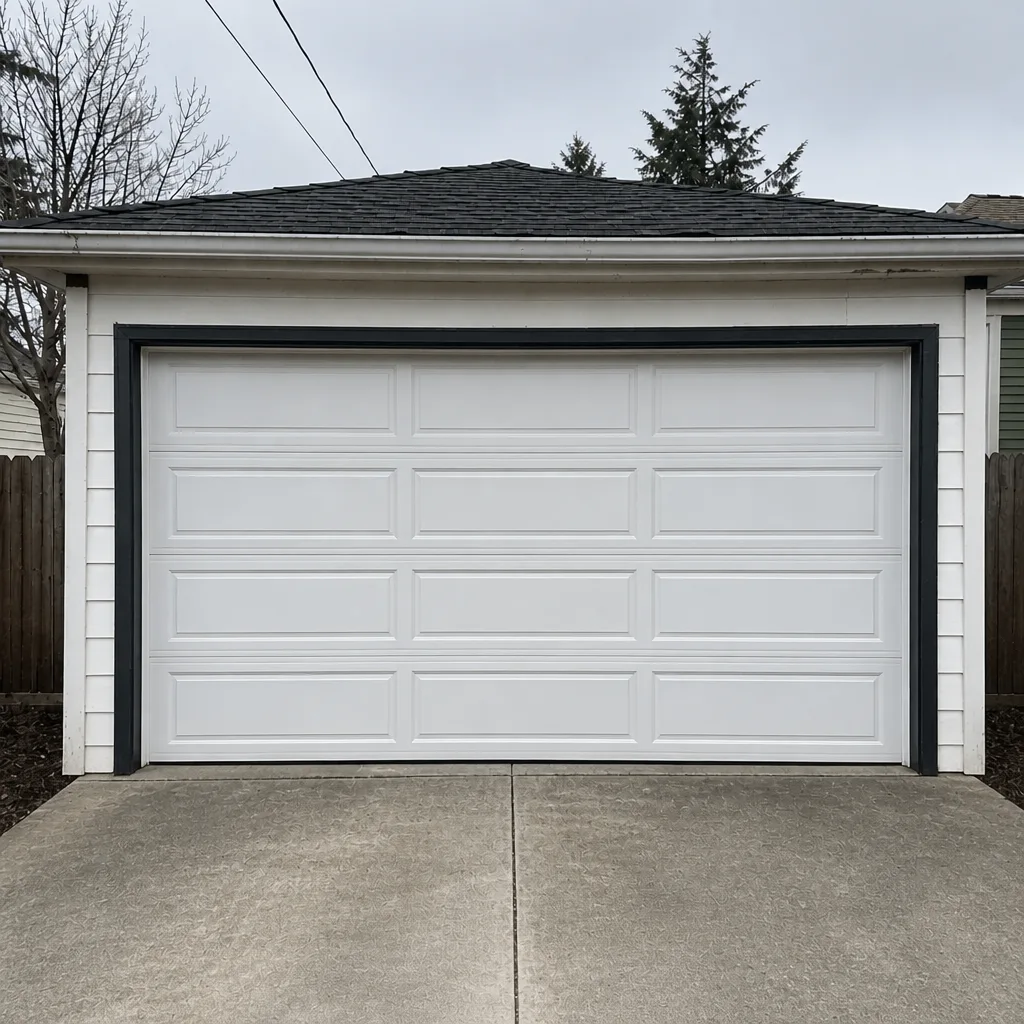 After
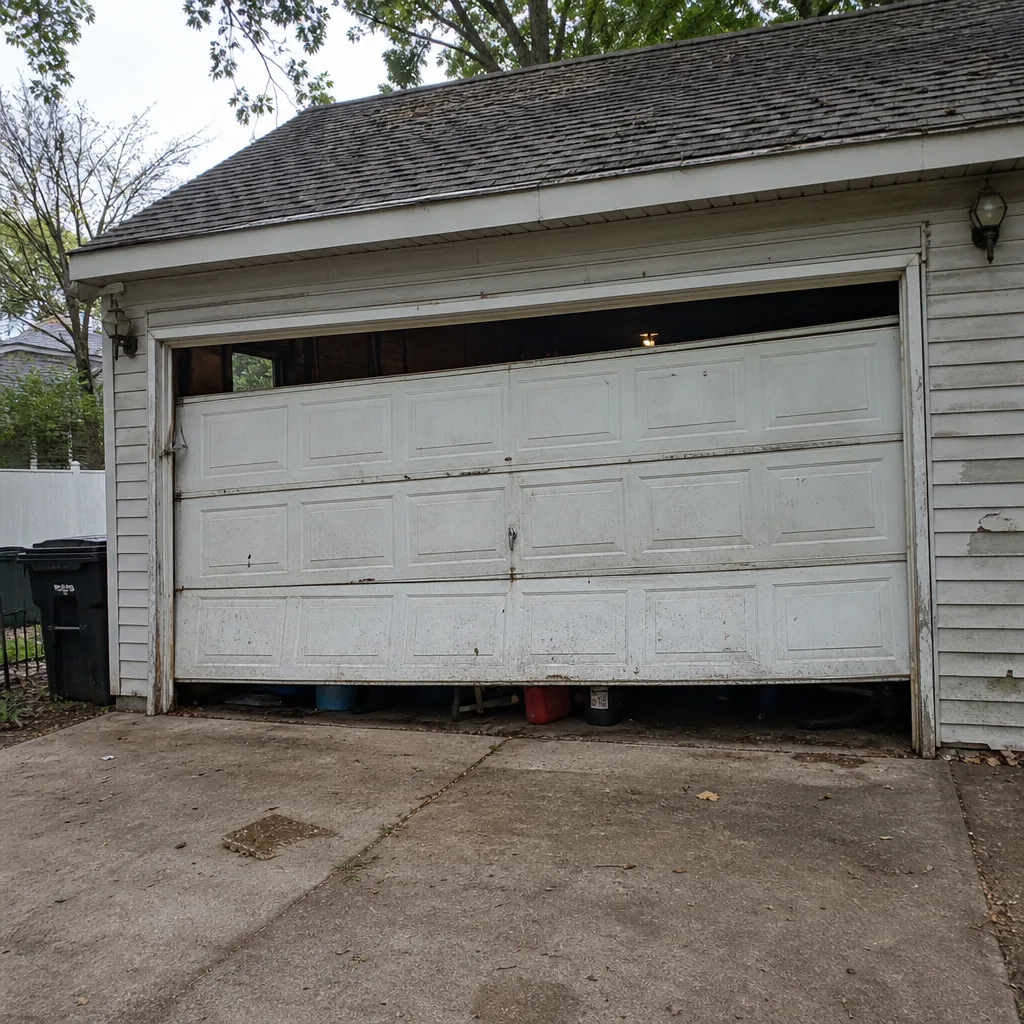 Before
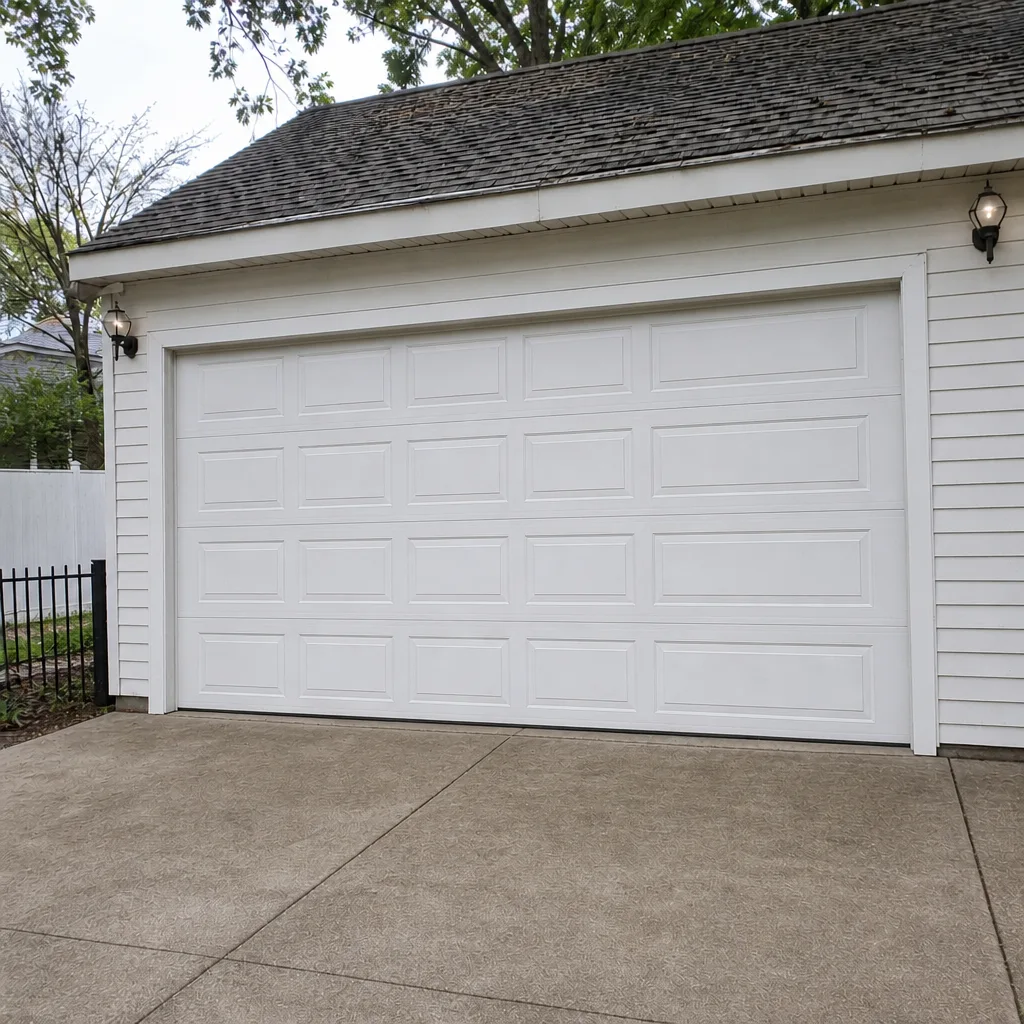 After
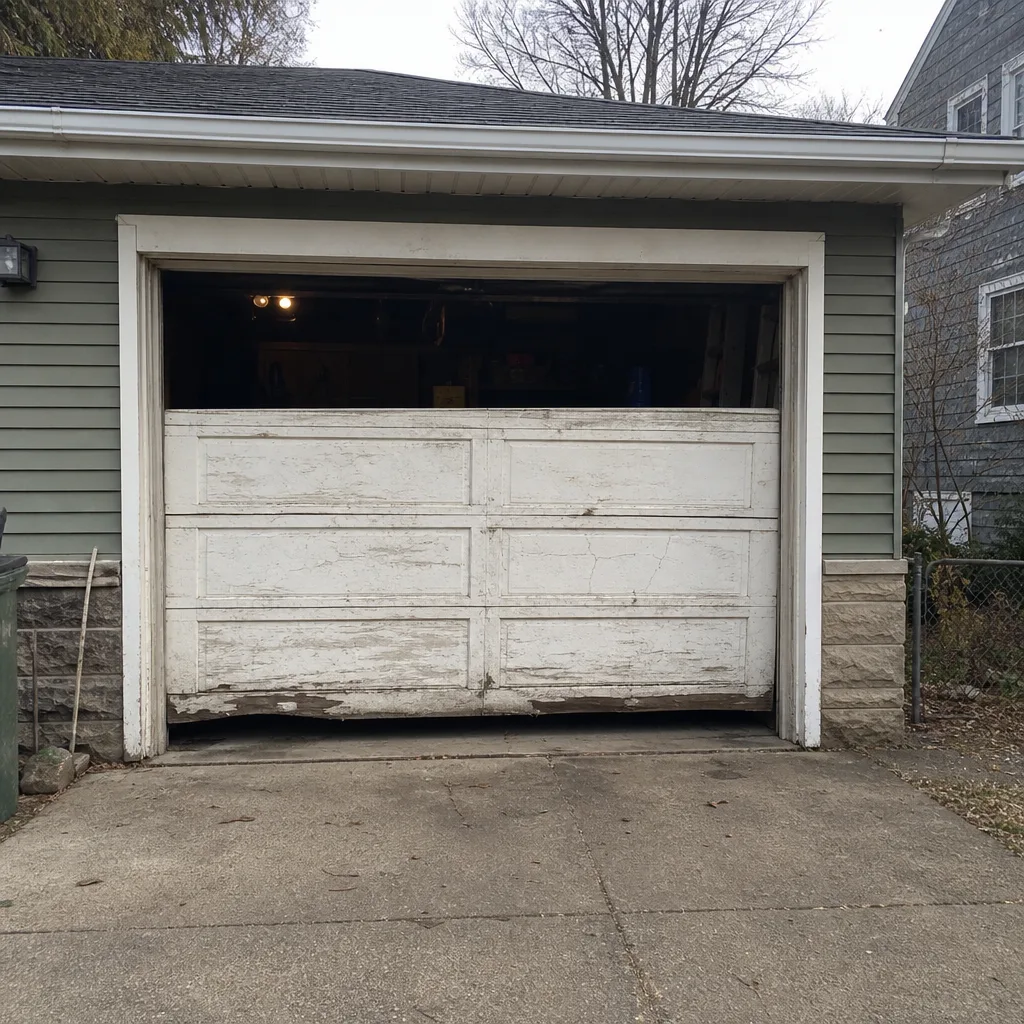 Before
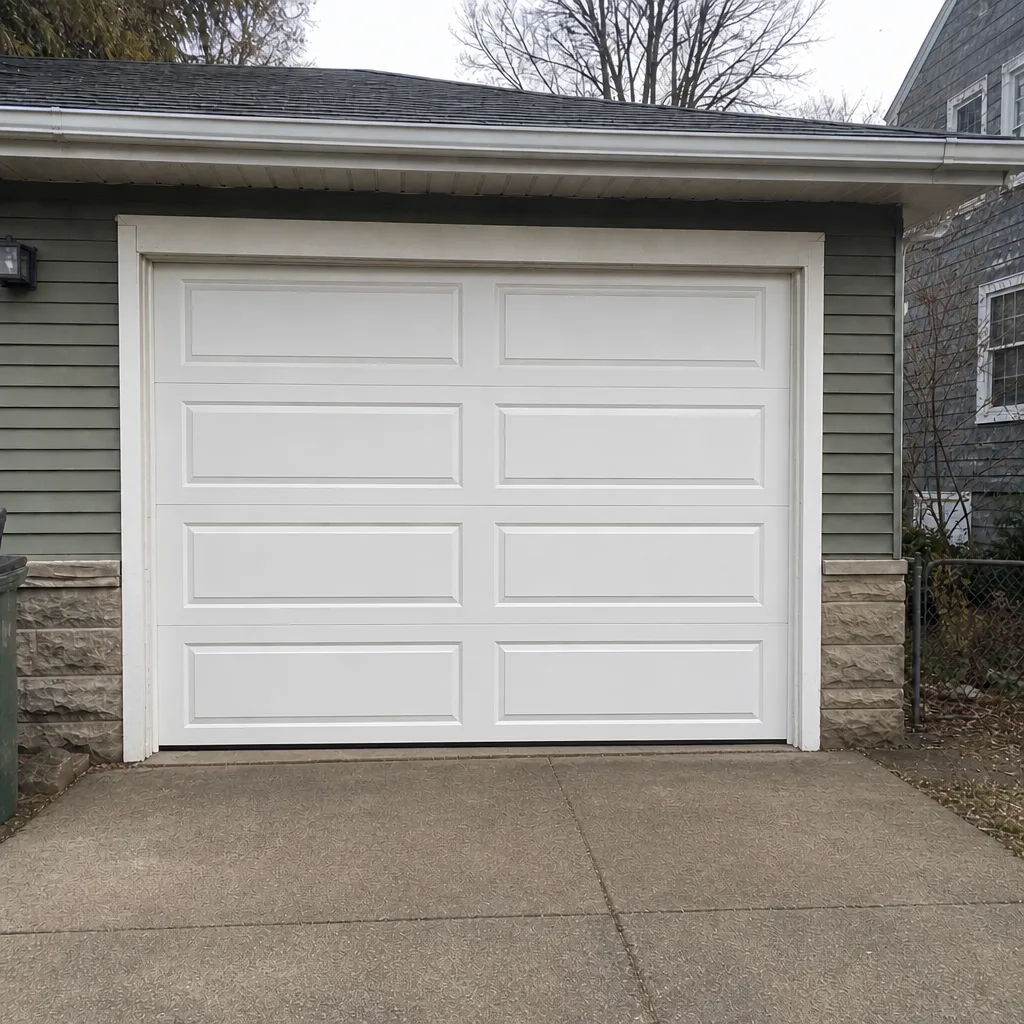 After
When to Call a Professional
Call a specialist when a spring breaks, when the door won’t close all the way and the garage is open to the alley, when the opener runs but the door doesn’t move, when a cable has come off its drum, or when a door is visibly off its tracks. Those are the situations where security or access can’t wait for a scheduled appointment. Also call when you’re planning a replacement and need the opening and framing measured before ordering, and when a door is noisy or uneven and you want it looked at before something fails. Garage Door Repair Northeast Minneapolis offers free estimates in Northeast Minneapolis. Call (844) 888-9545. We answer 24/7, with fast dispatch from 7am to 7pm, Sunday through Friday. Our technicians have up to 12 years of experience, and the price is quoted and agreed before any work starts.
Frequently Asked Questions
Typical spring replacement runs in the $180 to $340 range per spring, and because springs are usually replaced as a matched pair, a pair costs about twice that. The written estimate sets the final price. Call (844) 888-9545 for an exact quote. Estimates are free.
Yes. A door stuck open on an alley garage is a security issue, and we treat it as one. We answer 24/7, with fast dispatch from 7am to 7pm, Sunday through Friday. Call (844) 888-9545 and we’ll get you booked for the next opening.
No. The quoted price is agreed before any work starts, so the invoice matches the estimate you approved. If we find something that changes the scope, we tell you before doing the work rather than after. Call (844) 888-9545 for a free estimate.
The local pro we connect you with is licensed and insured as their state requires. Every technician dispatched is a garage door technician, not a generalist splitting attention across trades. Call (844) 888-9545 with any questions before booking.
It usually can, but only after the framing, headroom, side room, and slab have been measured. A sagging header or rotted jamb needs reinforcement before a heavier door goes on. The measurement step is what decides it, so have it done before ordering anything.
Most cities require a permit for structural changes, and requirements vary. Ask the City of Minneapolis building department about your specific project before work begins. We can walk you through what the work involves so you know what to ask.
The Bottom Line
Garage doors in Northeast Minneapolis fail for local reasons: freeze-thaw movement from October through April, alley-facing openings that limit clearance, and pre-1960 framing that decides what’s actually possible. Get the diagnosis right before you spend. Repair when the door and structure are sound. Tune up when the door still works but is rougher than it used to be. Replace when the framing, panels, or repeated failures point that way. And call a specialist for anything involving springs, cables, or a door that won’t close. Call (844) 888-9545 for a free estimate. We answer 24/7, with fast dispatch from 7am to 7pm, Sunday through Friday.
Written by the team at Garage Door Repair Northeast Minneapolis.