
Last updated November 21, 2026
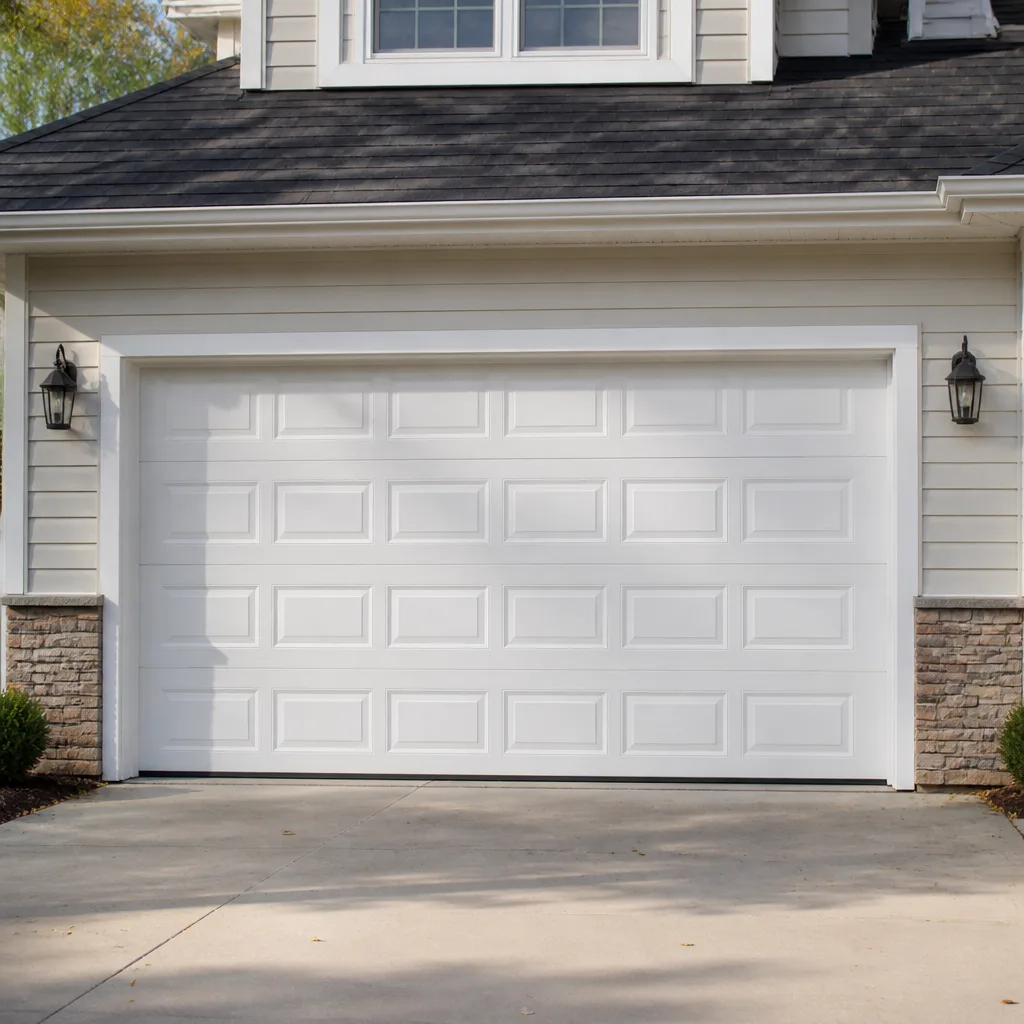 Raised-panel steel
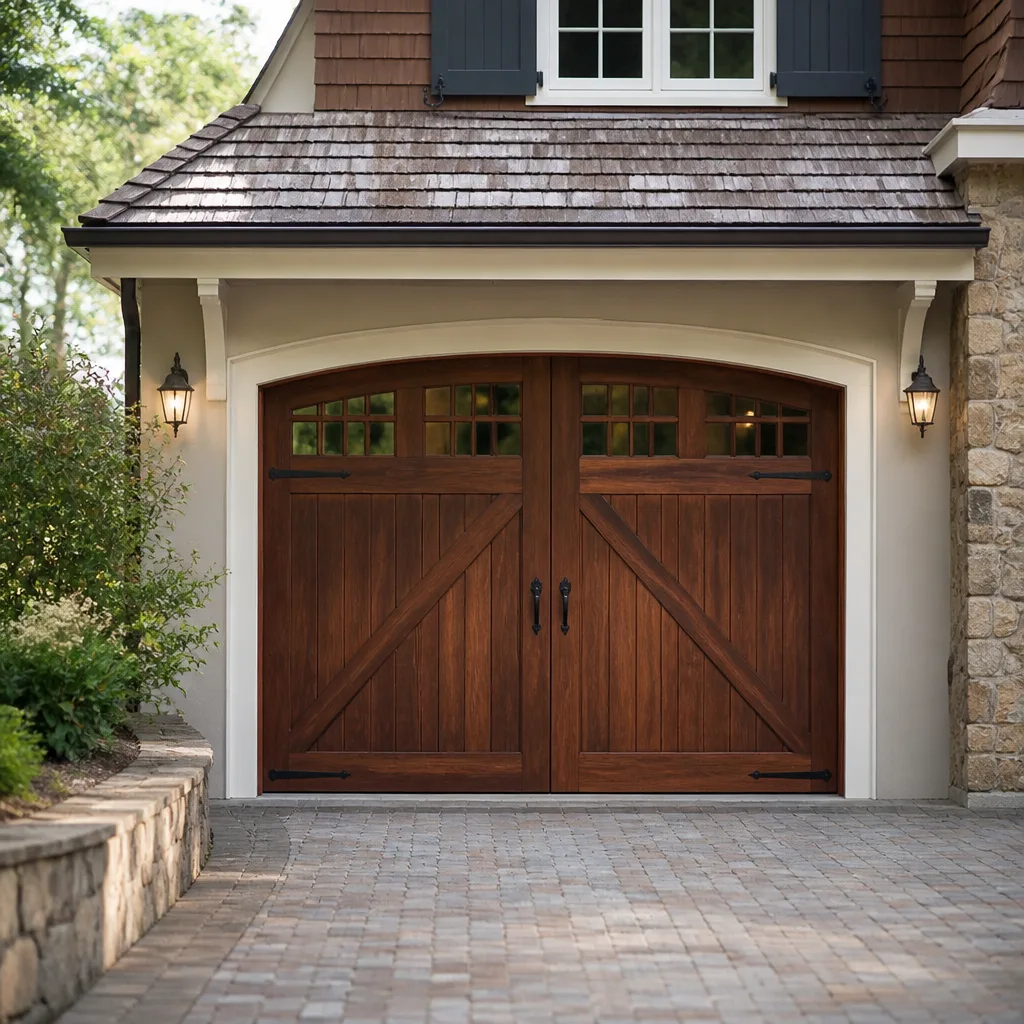 Carriage house
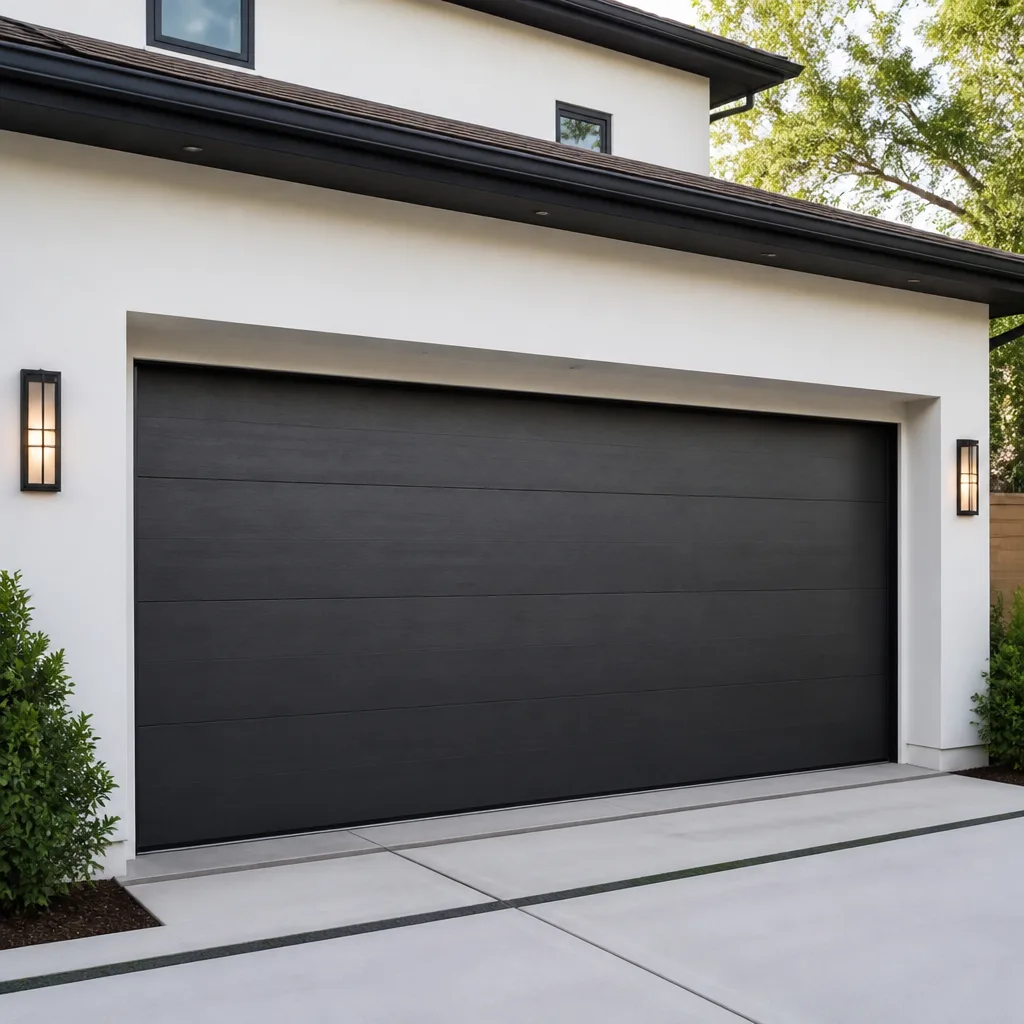 Modern flush
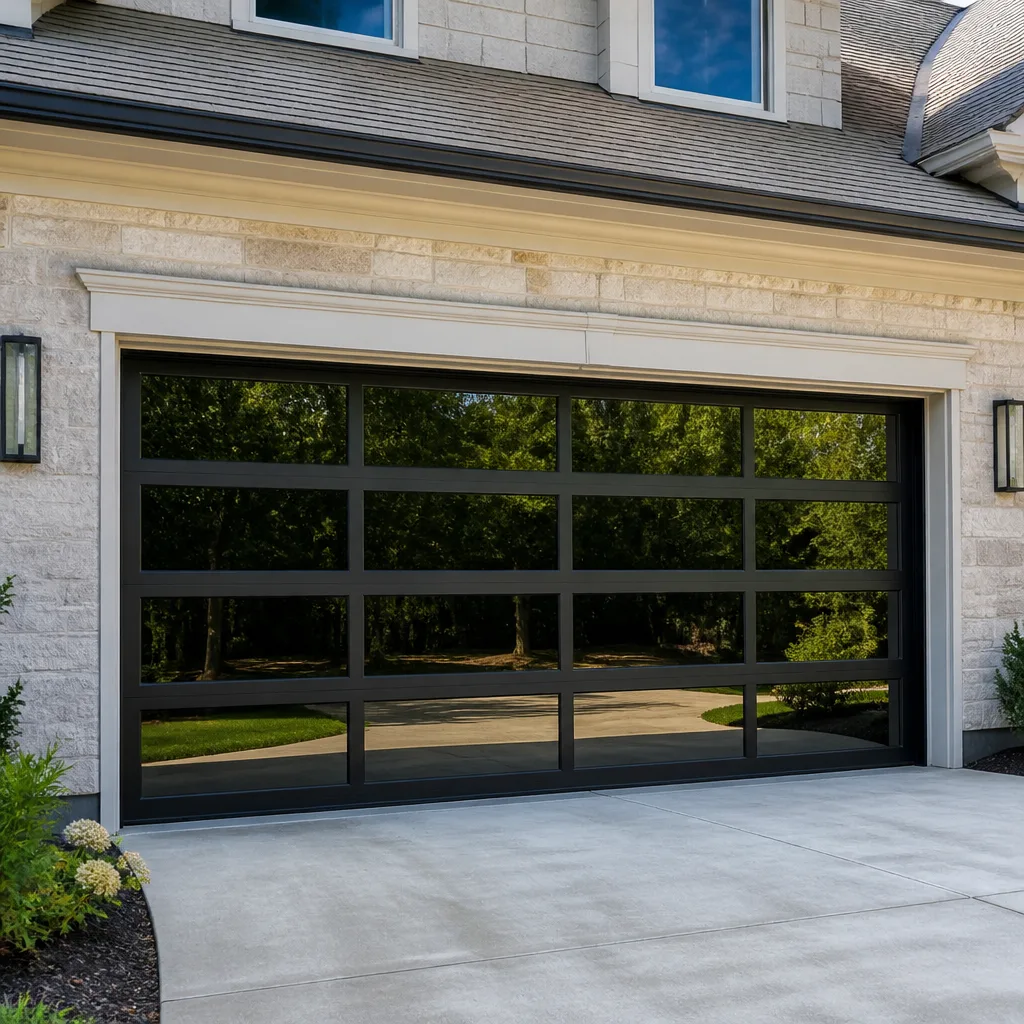 Full-view glass
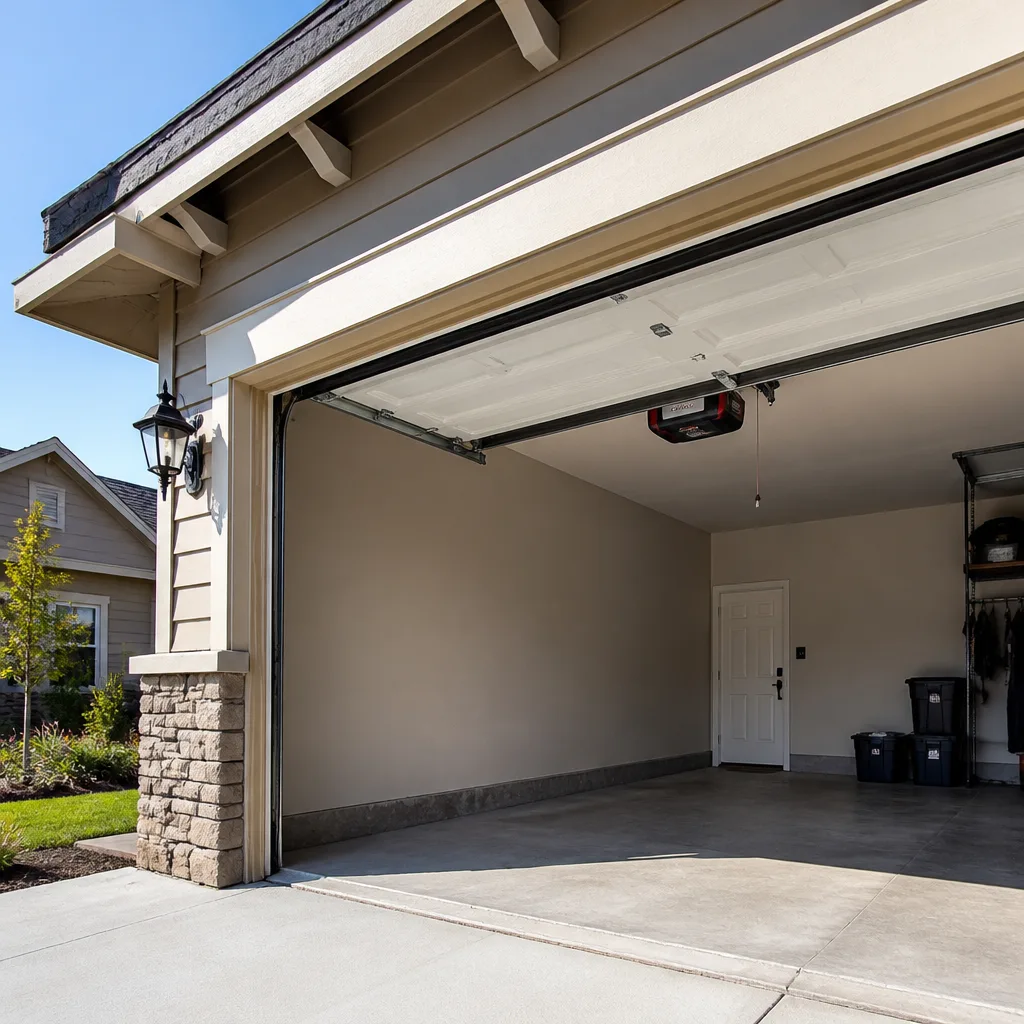 LiftMaster openers
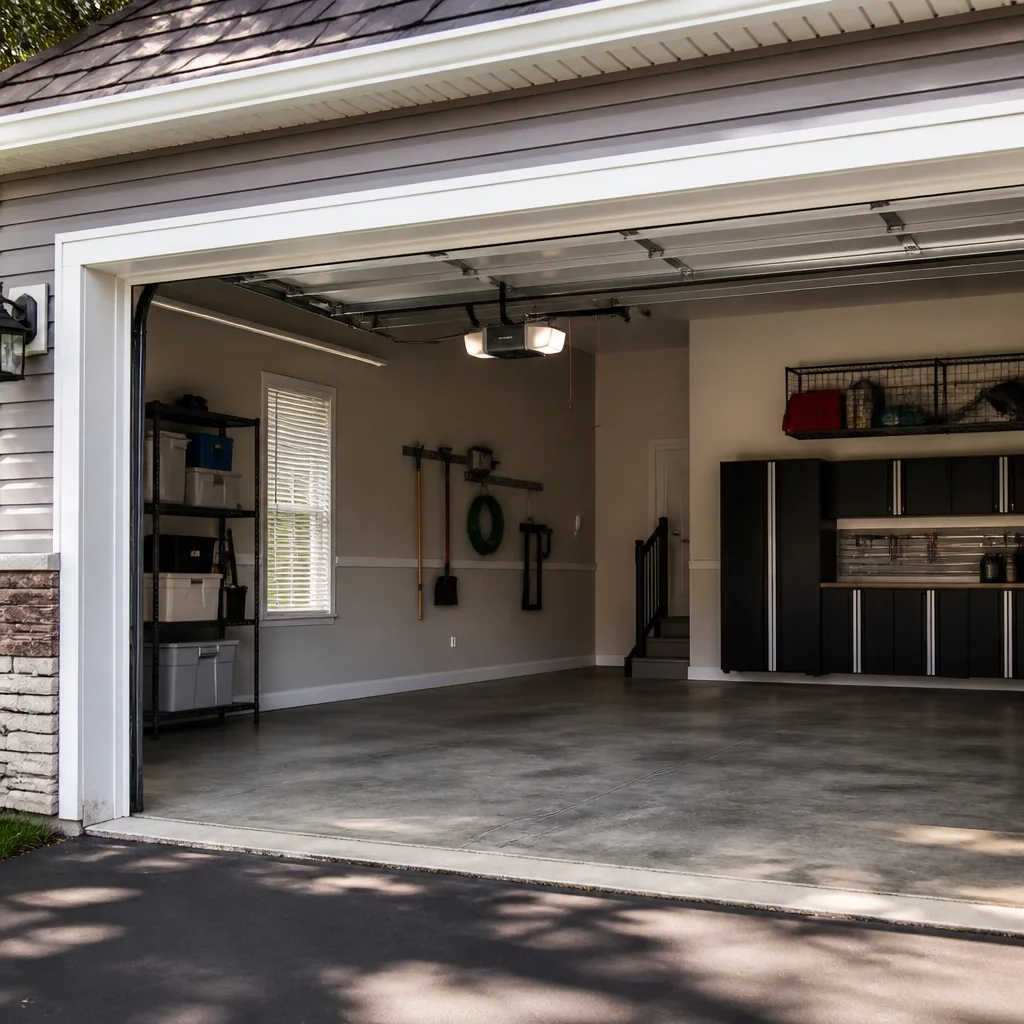 Chamberlain openers
Full 25-point door and opener safety check with every visit - springs, cables, rollers, tracks, and your LiftMaster or Chamberlain opener included
You get a price before we start. It does not change when the pro arrives.
Get your free estimateGarage Door Warning Signs: A Northeast Minneapolis Homeowner’s Reference Guide
A garage door that hesitates for two seconds before moving isn’t being slow. It’s telling you exactly which component is failing, and a technician can often name that component from your description alone. Most homeowners miss the message because they’ve normalized slow decay. A door that shudders on the way up, takes three tries to close, or grinds a little louder every winter gets filed under “just how it is.” It isn’t. Each sound and each movement pattern maps to a specific mechanical diagnosis. This guide walks you through those signals for homes in Northeast Minneapolis, separates the ones you can live with while you book service from the ones that mean stop using the door, and shows you how to describe a symptom so the right parts show up on the first visit.
Quick Answer
The clearest garage door warning signs in Northeast Minneapolis are grinding or popping sounds, jerking and uneven travel, a door that reverses before closing, visible sagging, and springs that look stretched or gap. Grinding and popping usually mean worn rollers, dry hinges or a failing bearing; jerking and reversing usually point to a binding track or a misaligned safety sensor. Stop using the door immediately if you hear a loud bang from above, see a gap in a torsion spring, or the door hangs crooked with a slack cable. Everything else can usually wait for a scheduled repair.
Styles & brands we work with
- Raised-panel steel
- Carriage house
- Modern flush
- Full-view glass
- LiftMaster openers
- Chamberlain openers
Table of Contents
- What Do the Noises Tell You? Sound-Based Diagnosis
- What Does the Way It Moves Tell You? Movement-Based Diagnosis
- Which Warning Signs Mean Stop Using the Door?
- How Do Northeast Minneapolis Winters Create False Warning Signs?
- Why Springs and Cables Deserve Special Caution
- How Do You Describe a Symptom So the Right Parts Arrive?
- Repair Now or Schedule Later? A Decision Framework
- Does Brand Matter for Diagnosis?
What Do the Noises Tell You? Sound-Based Diagnosis
A garage door is a mechanical system with a handful of moving parts under steady load, and each part fails with its own signature sound. Learning to separate them is the single fastest way to know what you’re dealing with before anyone arrives. Grinding, popping, squealing and banging are not interchangeable. They come from different places.
- Grinding – metal-on-metal contact. Usually worn steel rollers that have flat-spotted, dry hinges, or a failing bearing in one of the rollers. On older doors with nylon rollers, grinding can also mean a roller has cracked and the shaft is riding metal on metal.
- Popping – a sharp snap that repeats at the same point in travel. Often a hinge that’s seized and releasing under tension, or a roller jumping a worn section of track. Torsion springs can also pop once when they break, and that pop is a stop-use signal.
- Squealing – high-pitched and continuous. Almost always friction: dry hinges, dry rollers, or a torsion tube that needs lubrication. Squealing is one of the cheaper sounds to fix and one of the easiest to ignore until it turns into grinding.
- Banging or rattling – loose hardware. Track bolts that have backed out, a loose opener rail, or a door panel that’s worked its fasteners loose. Banging can also mean the door is hitting the frame because the tracks are out of plumb.
The location of the sound matters as much as the sound. A grind near the top of the door points at the torsion assembly or top rollers. A grind near the floor usually means bottom rollers or the bottom bracket. When you call, say where the noise happens in the travel, not just what it sounds like. That single detail lets a Northeast Minneapolis garage door specialist load the right replacement parts before heading out. If you’re already hearing a consistent grind, that’s the point to book garage door repair rather than keep running the door.
What Does the Way It Moves Tell You? Movement-Based Diagnosis
Movement is the other half of diagnosis, and it’s often more revealing than sound because it shows the system fighting itself. A door that runs smooth is a door with balanced springs, aligned tracks and a healthy opener. A door that jerks, sags, travels unevenly or reverses mid-cycle is showing you where the imbalance lives.
- Sagging on one side – a stretched or failing spring, or a cable that’s slack on one side. The door is being lifted unevenly and the opener is working harder to compensate.
- Jerking or stuttering – binding in the track, a bent section of rail, or a roller that’s catching. Jerking on the way down can also be a sign the opener’s force settings are compensating for a mechanical problem that should be fixed instead.
- Uneven travel – the door tilts as it rises or falls. Usually a track out of alignment or one spring doing more work than the other. On a two-spring torsion system, one spring can fail and the door will still move, which makes this one easy to miss.
- Reversing mid-cycle – the door starts down, then goes back up. Most often a misaligned safety sensor, something in the sensor beam, or a logic board interpreting a force spike as an obstruction. Sometimes it’s the travel limits drifting out of adjustment.
- Stopping short of fully closed or open – travel limits, a failing limit switch in the opener, or the door binding near the end of travel and the opener giving up.
A door that takes two or three attempts to close is not “temperamental.” It’s reversing because the opener senses resistance, and that resistance is either in the track or in the safety sensor circuit. Both are diagnosable with a description. If the opener is the culprit, that work falls under garage door opener repair, and we work on the brand you already have, whether that’s a Craftsman unit or a Wayne Dalton system.
Which Warning Signs Mean Stop Using the Door?
Some signs allow normal use while you schedule service. Others mean the door should not move again until a technician has looked at it, because the next cycle could drop the door or snap a cable. The distinction is not about how loud the problem is. It’s about whether a load-bearing part has already failed.
Stop using the door now if you notice any of these:
- A loud bang from above the door followed by the door not opening, or opening with the opener straining. That bang is usually a torsion spring breaking. Do not try to force the door.
- A visible gap in a torsion spring coil, or a spring that looks like a stretched accordion. A broken spring has released its stored energy and the door is being held by the opener alone.
- A slack or dangling cable on either side. Cables are under extreme tension and a slack cable means the system has lost balance.
- The door hanging crooked, with one side clearly higher than the other, especially after a spring or cable event.
- Any door that falls or drops fast when you disengage the opener. That’s a balance failure, not a sensor issue.
High-tension torsion springs and cables store enough energy to cause serious injury, and they are not a homeowner repair. We say this plainly because it matters: a garage door spring under load can hurt you badly, and no video makes that safe. If you’ve heard the bang, keep the door shut if you can do it safely, keep people and pets clear, and call a trained professional.
These signs allow normal use while you schedule service:
- Squealing or light grinding that hasn’t changed how the door moves
- A slow sensor that occasionally reverses on its own
- Loose hinges or a rattling opener rail
- Cosmetic dents, worn weather seal, or a single bent roller
How Do Northeast Minneapolis Winters Create False Warning Signs?
Northeast Minneapolis winters throw off more garage door diagnoses than any other season. Cold does things to a door’s mechanics that mimic real failures, and homeowners in neighborhoods like Audubon Park, Holland, and Columbia Park end up either panicking over a sensor that isn’t broken or ignoring a real problem because “it’s probably just the cold.”
Here’s what cold actually does, and how to tell it apart from a genuine fault.
- Frost on the safety sensors mimics sensor failure. If the door won’t close but the opener lights blink and the door reverses immediately, check whether the sensor lenses have frost or a film of ice on them. A sensor that’s frosted over reads the same to the opener as a blocked beam. If clearing the frost gets you back to normal, it was weather, not a fault.
- Cold grease mimics worn rollers. Garage door grease and lubricant thicken in freezing temperatures. A door that grinds or drags on the first cold morning but smooths out after a few cycles may simply have old grease that’s hardened. If the grind fades as the door warms up, suspect lubricant. If it stays constant, suspect the rollers.
- Contracted metal mimics a binding track. Steel tracks and door panels contract in extreme cold, and a track that’s slightly out of alignment in summer can bind in January. The clip that holds track sections together can also loosen. A door that jerks only on the coldest days is often a track that needs a small adjustment, not a replacement.
- Snow and ice on the apron mimic a bad opener. A door that closes partway and stops may be hitting a ridge of ice at the floor line. The opener senses resistance and gives up. Clear the apron before you assume the opener is failing.
The reliable test is weather versus mechanical. If a symptom appears only in cold and disappears after the door warms up or you clear frost and ice, it’s weather-driven and usually a lubricant or adjustment job. If the symptom is there on a mild day too, it’s mechanical and worth a proper look. Our technicians have up to 12 years of experience reading these seasonal false alarms, and knowing which is which saves you a wasted service call.
Why Springs and Cables Deserve Special Caution
Springs and cables are the parts that lift the door and hold its weight, and they’re the parts homeowners should never touch. A torsion spring can be under hundreds of pounds of tension even when the door is down and the system looks calm. When a spring breaks it releases that energy at once, which is why the sound is so sharp. A cable can do the same.
The warning signs on springs and cables are different from the noise-and-movement signs elsewhere in this guide. They’re visual and often sudden.
- Spring gap – a torsion spring that’s broken shows a visible gap between coil sections. A door with a broken spring is resting its full weight on the opener.
- Stretched spring – an extension spring that hangs longer than its partner, or a torsion spring that looks like an uneven coil, is fatigued and near failure.
- Slack cable – a cable that has come off its drum or gone limp. Cables don’t fail quietly; a slack cable usually follows a spring event or a door that’s come off track.
- Door won’t stay up when reopened manually – if you disengage the opener and the door won’t hold itself halfway, the springs aren’t balancing it.
Spring replacement is a dedicated, safety-aware service, not a side job, and it’s the item we want on your radar the moment you see these signs. Not every general handyman will take it on, and we’d rather you know that than have someone try. If you suspect a spring or cable, call for a trained technician rather than a look. This is also the point where a broken door can leave a car trapped or a home unsecured, which is why we treat it as an emergency service when your access or security can’t wait.
How Do You Describe a Symptom So the Right Parts Arrive?
The difference between a quick repair and a second visit often comes down to how well you describe the problem on the phone. A technician who knows the symptom, the location and the brand can carry the right rollers, hinge or sensor the first time. Here’s a simple method for documenting what your door is doing before you call.
- Name the phase. Does it happen on opening, closing, or both? Does it happen at the start, in the middle, or near the end of travel?
- Name the location. Left side, right side, top, bottom, overhead. “Grinds at the top on opening” is a usable description. “It’s noisy” isn’t.
- Name the frequency. Every time, every few cycles, or only on cold mornings? Intermittent symptoms still matter and often point to sensor or logic issues.
- Note the door’s brand and the opener’s brand if you can read them. A Clopay door and an Amarr door can have different panel and track hardware, and the opener’s brand tells a technician which force and travel adjustments they’ll be working with.
- Take a short phone video of one full open and close cycle, if it’s safe to run the door. A 15-second clip shows travel, sound, tilt and reversal in one shot.
- Don’t run the door if you saw any stop-use sign. Describe what you saw instead.
That’s the whole method. It costs you a minute and it saves time on the visit, because the technician arrives already knowing whether they’re looking at a roller, a sensor, a track or an opener. If you document that way before you call, you’re doing the diagnostic work half yourself, and it shows in the first five minutes of the visit.
Repair Now or Schedule Later? A Decision Framework
Most warning signs fall somewhere between “call today” and “book it when you can.” A simple framework keeps you from both overreacting to a squeak and underreacting to a real failure.
Call today: the door won’t open or close at all, a spring or cable looks wrong, the door is hanging crooked, you heard a bang, or the door is blocking access or leaving the home unsecured. These are the “when you can’t wait” situations, and emergency garage door service exists for them.
Book within the next week or two: grinding or squealing that’s steady but not getting worse, a door that reverses occasionally, a travel limit that needs adjusting, loose hardware, or a worn weather seal.
Watch and note: a symptom that appears only on the coldest Northeast Minneapolis mornings and disappears with the frost. Track it for a couple of weeks and see if it’s weather or mechanical.
On timing, be straight with yourself about which bucket you’re in. A door with a failing spring can still open for weeks, until it can’t, and the failure tends to happen when the door is under load, which is inconvenient by definition. Booking a scheduled repair on a steady grind is far less disruptive than waiting for the bang. And when you do call, be clear about what you’re seeing, because the price is quoted and agreed before any work starts, so an accurate description up front keeps the estimate accurate.
Does Brand Matter for Diagnosis?
Brand matters more than most homeowners expect. The same symptom can have different likely causes depending on the door and the opener, and the parts that fit are brand-specific. That’s why we’re factory-familiar with the major brands you actually own, including LiftMaster, Chamberlain and Genie openers and Clopay, Amarr, Wayne Dalton and Craftsman doors, and we work on the brand you already have rather than steering you toward a system we prefer.
- Opener brands behave differently. A LiftMaster or Chamberlain unit tends to report a force reversal the same way a Genie unit does at the box, but the way you adjust travel limits and force sensitivity differs by brand and by model. Knowing the brand tells a technician which adjustment sequence to expect.
- Door hardware is brand-specific. Wayne Dalton panels and hinges don’t interchange with Clopay or Amarr hardware. A roller that fits one may not seat properly in another, so the right brand avoids a return trip for parts.
- Springs are matched to the door, not the brand alone. Spring size is calculated from door weight and height, so the door’s brand and construction tell a technician the load they’re working with, which matters on a spring replacement.
The practical benefit is speed and accuracy. When we know you have a Craftsman opener on a Wayne Dalton door and the symptom is a mid-cycle reversal, we arrive with sensors and the right replacement logic rather than guessing. It’s the same reason the new-door side of the business starts with a proper measure: whether you’re looking at garage door installation or a repair, knowing the exact system you have is what makes the work go right the first time.
Common Mistakes to Avoid
- Treating a slow door as a personality trait. If your door hesitates, stutters or takes multiple tries to close, that’s a mechanical signal, not a quirk. Normalizing it is how small fixes become broken springs.
- Oiling everything and calling it maintenance. Spraying lubricant on tracks and springs doesn’t fix worn rollers or a failing bearing; it can attract grit and make things worse. Diagnose the sound first, then lubricate the right parts.
- Trying to adjust or replace a torsion spring yourself. This is the most dangerous repair in the trade. Springs and cables store enough energy to cause serious injury, so leave them to a trained professional even if you’re handy.
- Ignoring Northeast Minneapolis winter noise until spring. A grind that only shows up on cold mornings is often hardened grease or contracted metal, not a failed part. Track whether it stays constant on mild days before you assume the worst.
- Calling for a repair without describing the symptom. Telling a technician “my garage door is broken” guarantees a diagnostic visit. Telling them “it grinds at the top on opening but the door still moves fine” gets the right parts on the first trip.
- Assuming you need a new door when you need a repair. A sagging or jerking door is usually a spring, track or balance issue, not a reason to replace the whole door. Installation is for a failed door, a style change, or a panel that can’t be matched.
- Forcing a door that’s already failed. Running an opener against a broken spring or a slack cable wears out the opener and can drop the door. Stop the door and call.
See the difference
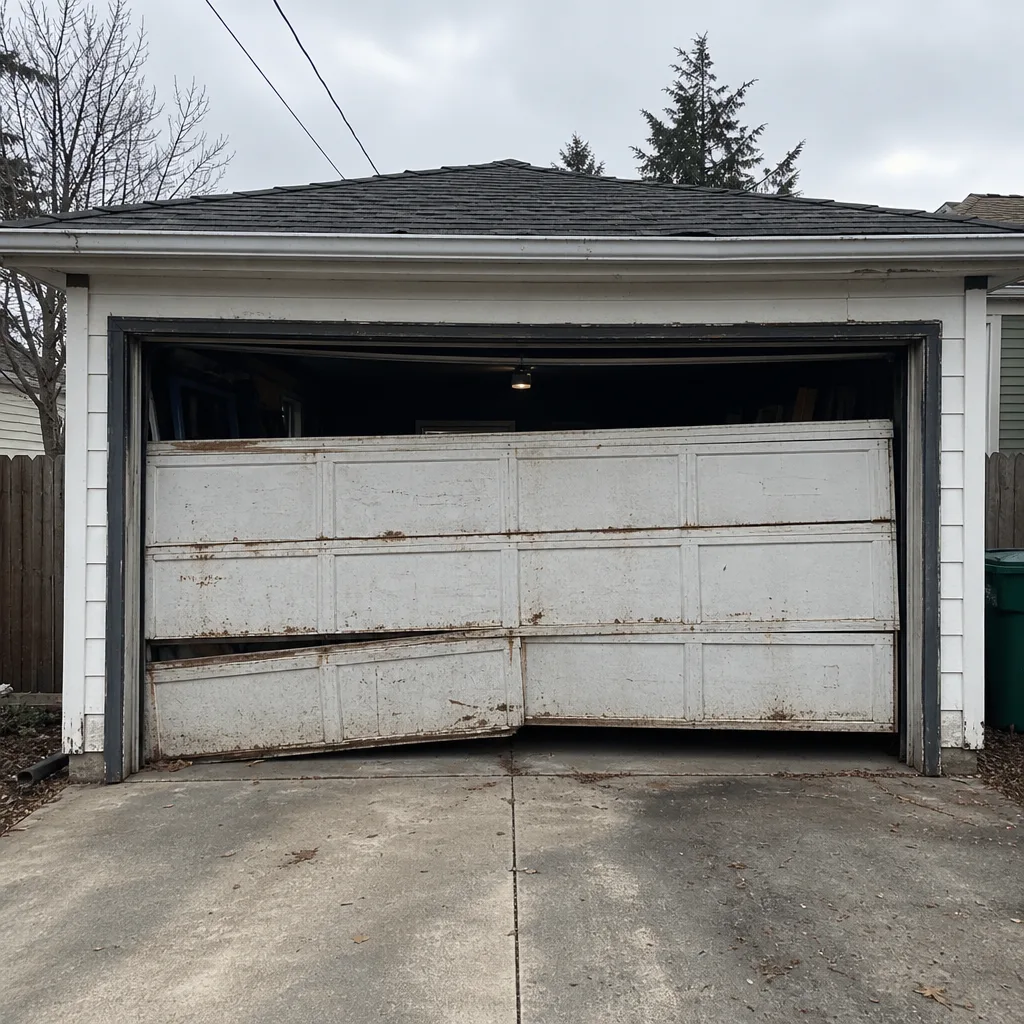 Before
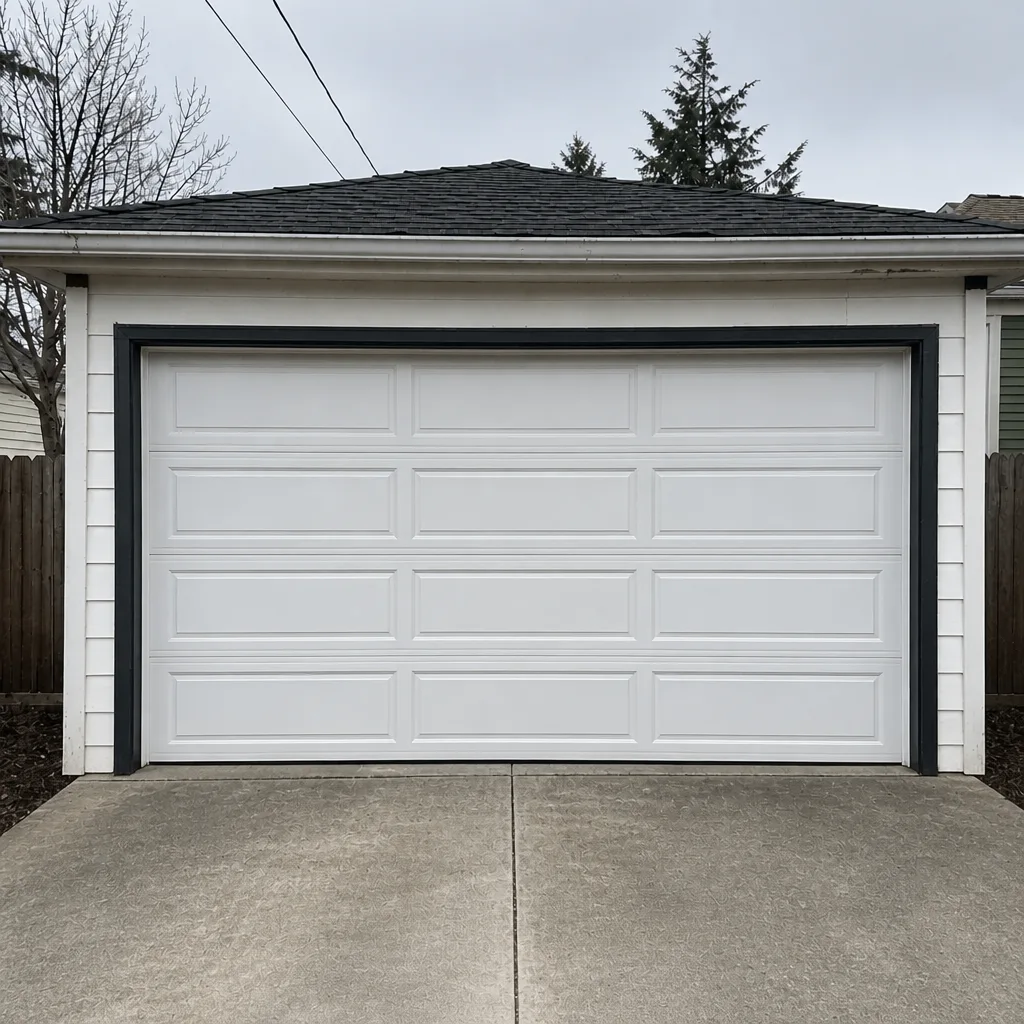 After
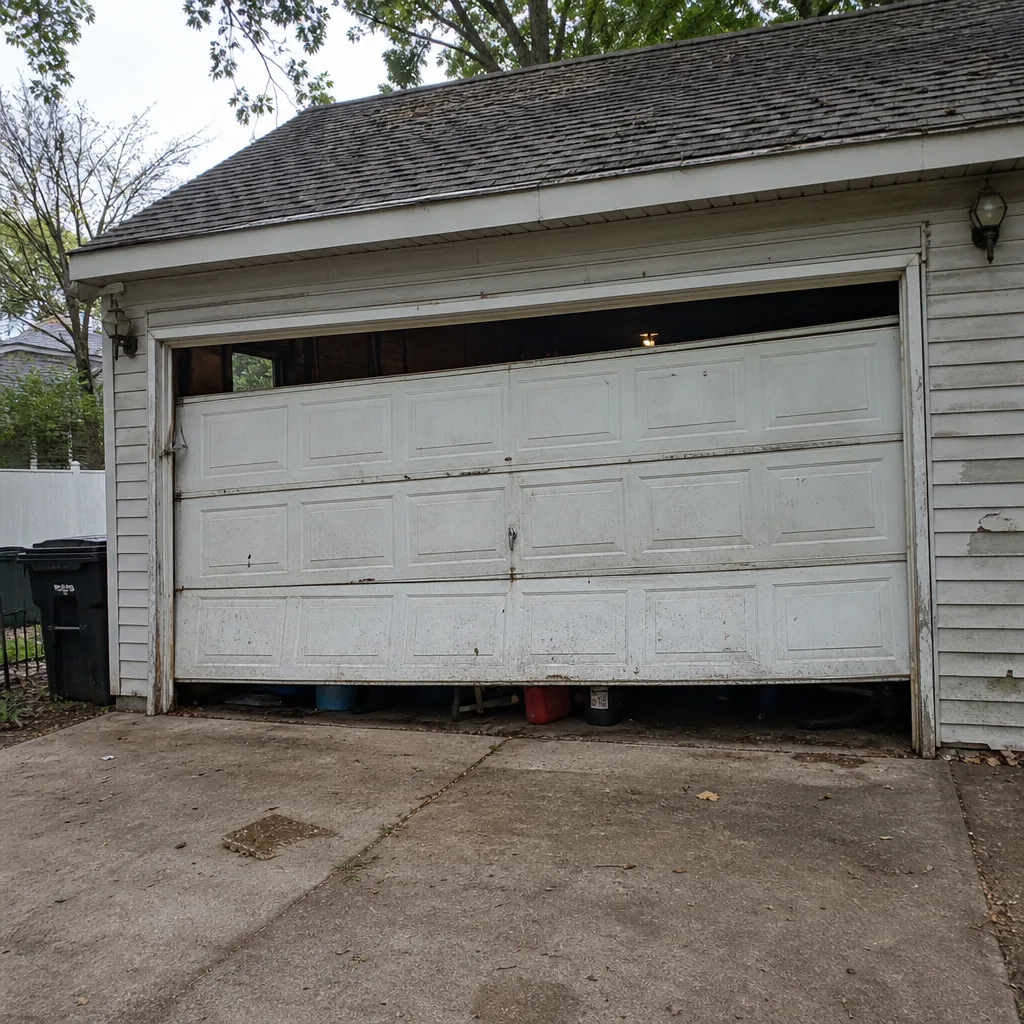 Before
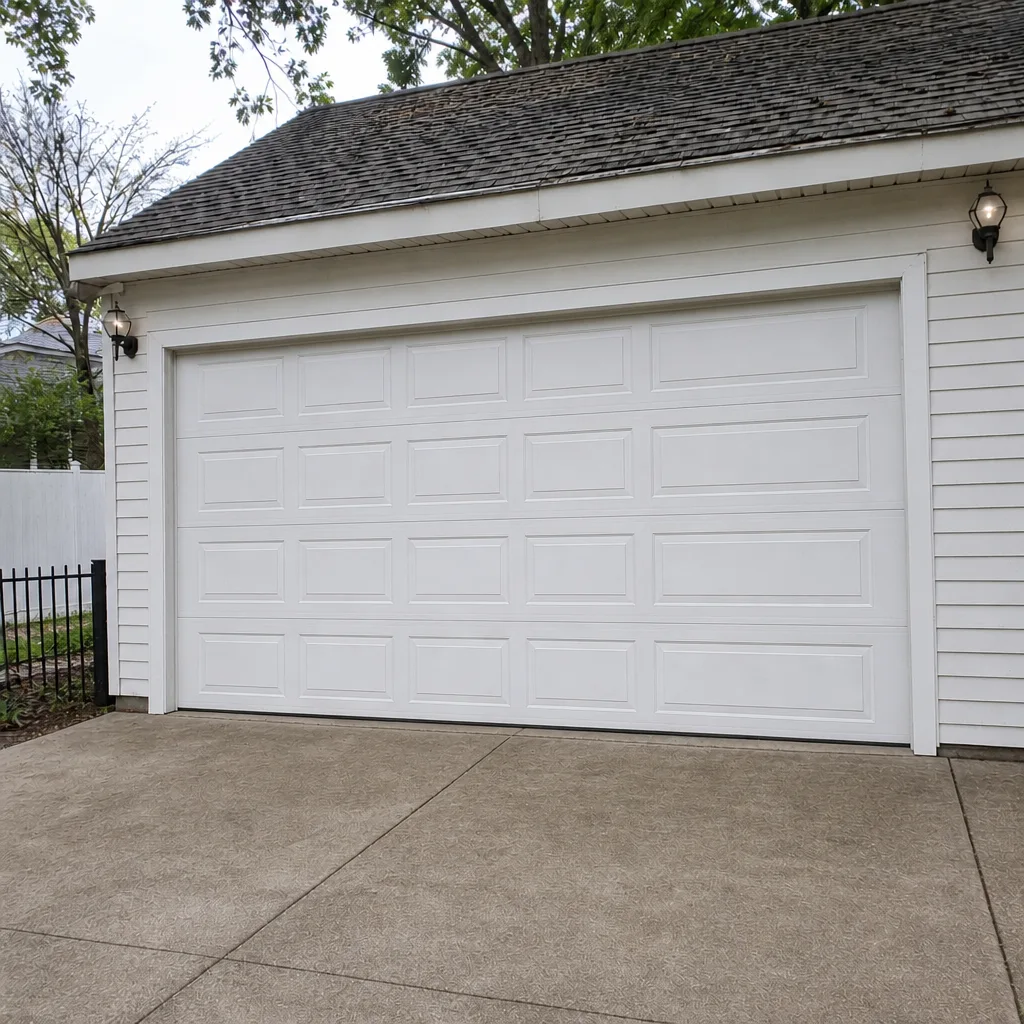 After
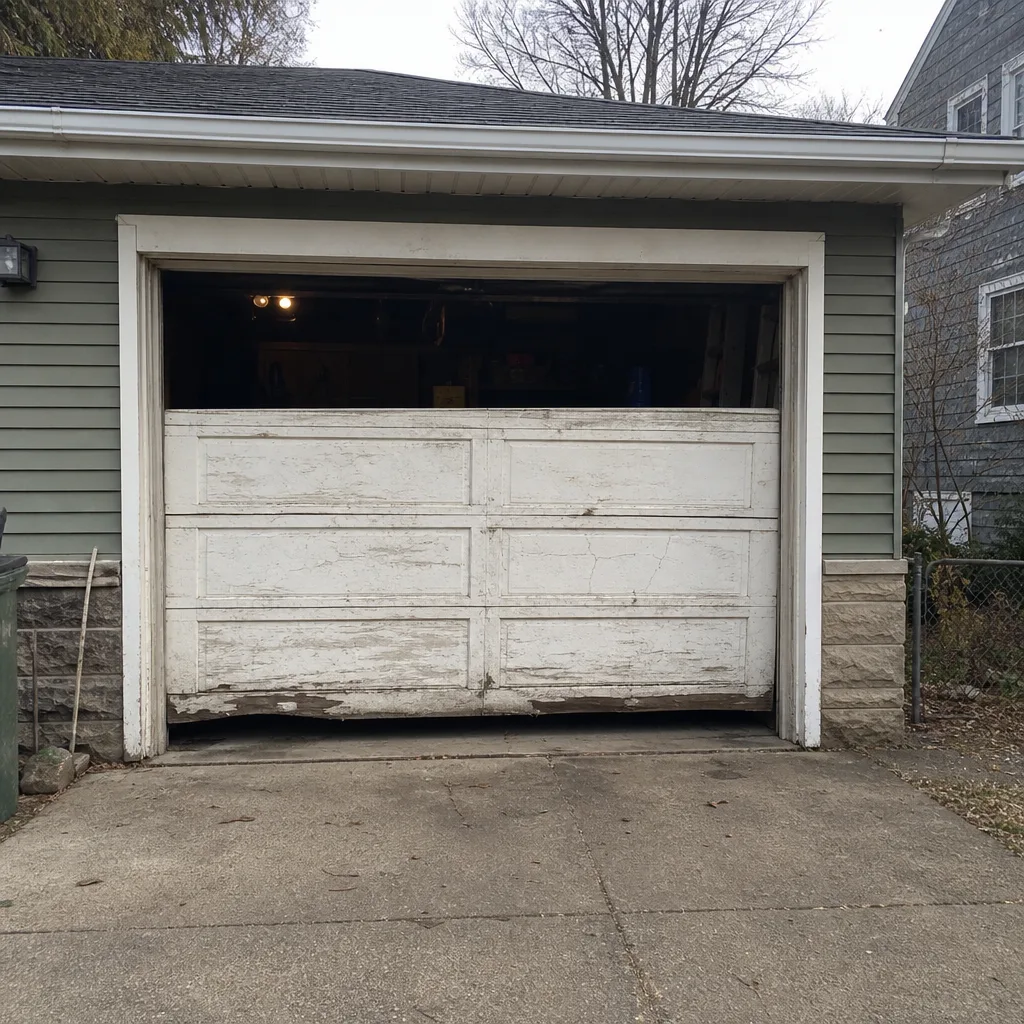 Before
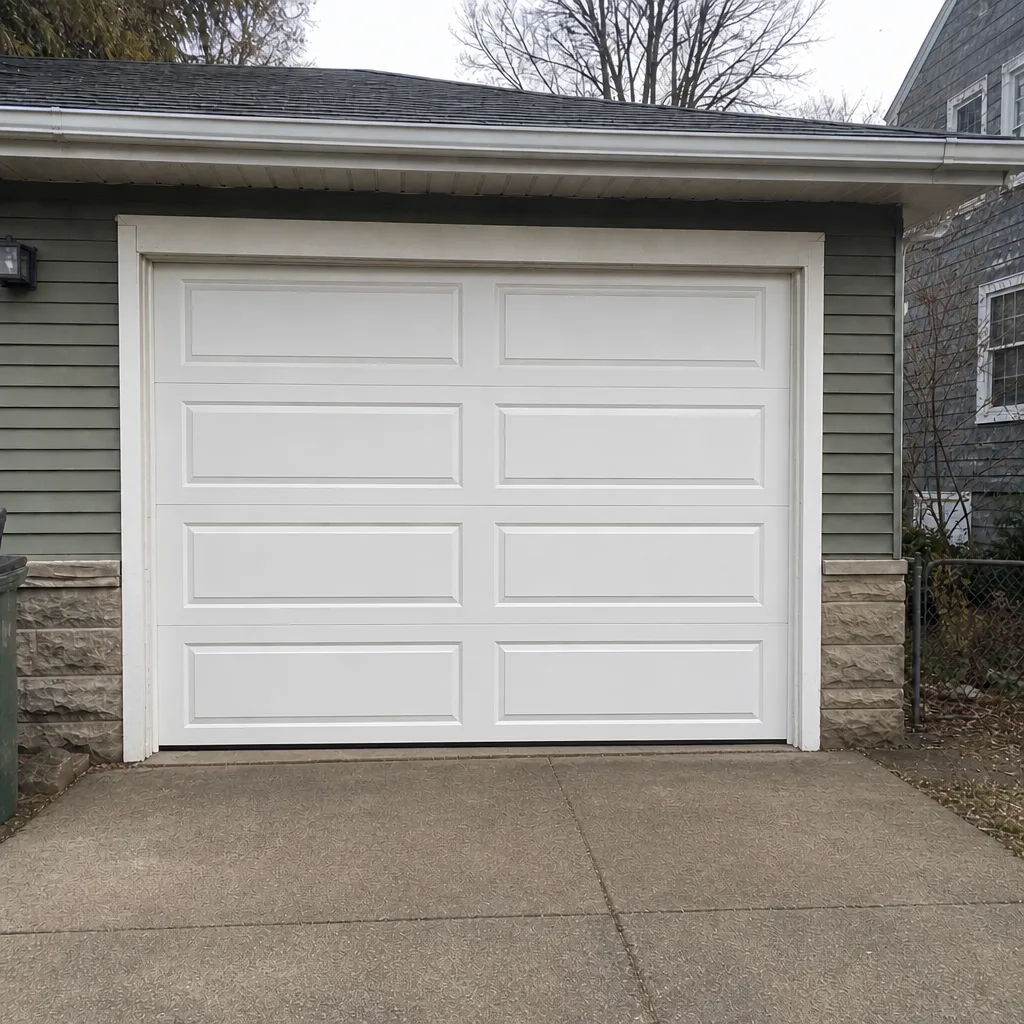 After
When to Call a Professional
Call a professional when the door won’t operate, when you see a spring gap or a slack cable, when the door hangs crooked, or when a loud bang has come from above the door. Call when the door reverses on its own and clearing the sensor doesn’t fix it, when it jerks or binds and you can’t correct it with a track adjustment, or when the opener is straining against a door that used to feel light. If the problem only appears in Northeast Minneapolis cold and vanishes on mild days, you can usually wait and note it, but if it persists, it’s worth a look. Garage Door Repair Northeast Minneapolis offers free estimates in Northeast Minneapolis. Call (844) 888-9545. We answer 24/7, with fast dispatch from 7am to 7pm, Sunday through Friday.
If your door needs more than a repair, the same specialists who diagnose springs and openers also handle installation. Whether you’re replacing a worn-out panel or looking at a new door altogether, the measure and the written price come first, and no work starts until you’ve agreed to it. Read more about our Garage Door Repair Northeast Minneapolis approach, or ask about scheduling when you call.
Frequently Asked Questions
A broken spring shows a visible gap between the coil sections on a torsion spring, or a door that won’t hold itself up when you disengage the opener. A weak or fatigued spring is one that’s stretched and taking two or three tries to lift the door, or a door that sags on one side. Both are reasons to stop using the door and call a professional, because the spring is a load-bearing part and the next cycle could be the one that fails. Call (844) 888-9545 for an exact quote.
Usually not, if it disappears once the door warms up or the frost clears. Cold thickens grease and contracts metal, and both can mimic a worn roller or a binding track. Track it for a couple of weeks. If it grinds on mild days too, or the grind gets progressively louder, it’s a mechanical issue worth a look. Call for a free estimate.
Usually yes, while you book service, because a mid-cycle reversal is most often a safety sensor or a travel limit, not a structural failure. But if the reversal started after a bang or a spring event, stop using the door. If the door reverses on every cycle and clearing the sensor doesn’t fix it, it’s worth scheduling rather than living with it. Call (844) 888-9545. We answer 24/7.
That bang is almost always a torsion spring breaking, which releases stored energy at once and leaves the door resting on the opener instead of its springs. Do not try to force the door open. Keep people and pets clear and call a trained technician, because springs and cables store enough tension to cause serious injury. We treat this as an emergency call when access or security can’t wait.
Diagnosis starts with a free estimate: the local professional who comes out quotes the exact repair in writing, and the price is agreed before any work starts. The written quote sets the price, so there are no surprises when the work is done. Call (844) 888-9545 to get an exact quote. Estimates are free.
The local pro we connect you with is licensed and insured as their state requires, and they work on garage doors exclusively rather than splitting attention across other trades. Our technicians have up to 12 years of experience with major door and opener brands, including LiftMaster, Chamberlain, Genie, Clopay, Amarr, Wayne Dalton, Craftsman and Raynor. Call (844) 888-9545 to book a visit.
The Bottom Line
Garage door warning signs are not vague. Grinding, popping, squealing and banging each point to a specific part, and movement problems like sagging, jerking and mid-cycle reversal show you where the imbalance is. Learn to separate the signs you can live with while you book service from the ones that mean stop using the door, and remember that Northeast Minneapolis winters create false alarms through frost, cold grease and contracted metal. Describe your symptom by phase, location and frequency, note the brand, and take a short video if it’s safe. The right description brings the right parts. And when a spring or cable is involved, call a professional rather than a look.
Written by the team at Garage Door Repair Northeast Minneapolis.